How to Improve Cycling Performance in 2026: A Full Guide

Table of Contents
- Build Your Winter Training Foundation for 2026 Cycling Performance
- How to Increase FTP in 2026 with Smarter Interval Training
- Your Cycling Strength Training Routine for Muscular Endurance
- Best Cycling Recovery Techniques to Protect Long-Term Gains
- Cycling Nutrition Strategies for Endurance and Metabolic Efficiency
- Equipment Trends That Affect Cycling Performance in 2026
- Conclusion
Last Updated: August 9, 2026
Build Your Winter Training Foundation for 2026 Cycling Performance
Most cyclists treat winter as a holding pattern. Winter is where your 2026 cycling performance is actually built, not just maintained.
Base training develops aerobic capacity, improves fat oxidation, and conditions your cardiovascular system for sustained effort. Without it, interval training later in the season produces diminishing returns. The core principle is periodization, the structured sequencing of training stress and recovery across a season. A well-designed winter plan typically runs 8 to 16 weeks, progressing from lower-intensity, higher-volume work toward more specific efforts. According to USA Cycling's athlete development resources, periodized training consistently produces better long-term outcomes than unstructured year-round training.
Base Training and Periodization Principles
Base training centers on riding at low-to-moderate intensity, typically below your lactate threshold, for extended periods. This builds aerobic efficiency without accumulating fatigue that compromises recovery. Keep roughly 80 percent of winter rides in this lower zone, reserving 20 percent for threshold or tempo efforts.
Periodization should follow progressive overload: add training stress across three weeks, then reduce volume in the fourth week to allow adaptation. This prevents chronic fatigue from undermining gains.
Riding by Feel vs. Data-Driven Metrics
The most effective approach combines both. Use heart rate variability and perceived exertion to gauge daily readiness. Use power output and cadence data to track adaptation over weeks. If your data says you should hit a threshold interval but your legs feel hollow and your resting heart rate is elevated, the data is describing yesterday's fatigue, not today's capacity. Riding by feel teaches you to recognize effort levels no device can fully capture. Data confirms whether your feel-based judgments are calibrated correctly.
How to Increase FTP in 2026 with Smarter Interval Training
Increasing your FTP (functional threshold power) is the most direct path to faster cycling. FTP represents the highest average power output you can sustain for approximately one hour and anchors your entire training zone structure.
The mistake most cyclists make is treating all interval training as equivalent. The type of interval, duration, recovery ratio, and timing within your training block all determine whether you're building FTP or just accumulating fatigue.
Polarized Training and Lactate Threshold Work
Polarized training divides effort into two distinct zones: easy aerobic work and hard anaerobic efforts, with minimal time in the moderate "gray zone." Research consistently shows polarized approaches produce stronger adaptations than moderate-intensity-dominated plans. According to the American College of Sports Medicine's exercise physiology guidelines, training at and above lactate threshold is essential for improving anaerobic capacity and sustained power output.
For FTP development, lactate threshold intervals are the most targeted tool: sustained efforts at roughly 95 to 105 percent of your current FTP, typically lasting 10 to 20 minutes, with equal or slightly shorter recovery periods. Two to three sessions per week, embedded within a polarized framework, produce measurable FTP gains over 6 to 8 weeks. Higher cadence efforts at threshold reduce muscular stress while maintaining cardiovascular load, supporting recovery between sessions.
Process Goals vs. Performance Goals
The difference between cyclists who improve consistently and those who stall often comes down to goal structure.
Performance goals are outcome-based: "I want to finish the gran fondo in under four hours." They're motivating but outside your direct control. Process goals target behaviors that drive performance: "I will complete three structured interval sessions per week for eight weeks." These are fully within your control.
Set one clear performance goal for the season, then build process goals beneath it. Track process compliance weekly. Performance outcomes follow from process consistency.
| Goal Type | Example | What You Control |
|---|---|---|
| Performance goal | Sub-4hr gran fondo finish | Indirect, depends on conditions |
| Process goal | 3 interval sessions per week | Direct, daily decision |
| Process goal | 8 hours of base training per week | Direct, schedule-driven |
| Process goal | Complete 8-week FTP block | Direct, commitment-based |
Your Cycling Strength Training Routine for Muscular Endurance
Cyclists who skip strength training leave real power on the table. The muscles that drive your pedal stroke, primarily glutes, quads, and hamstrings, respond directly to resistance training in ways cycling alone cannot replicate.
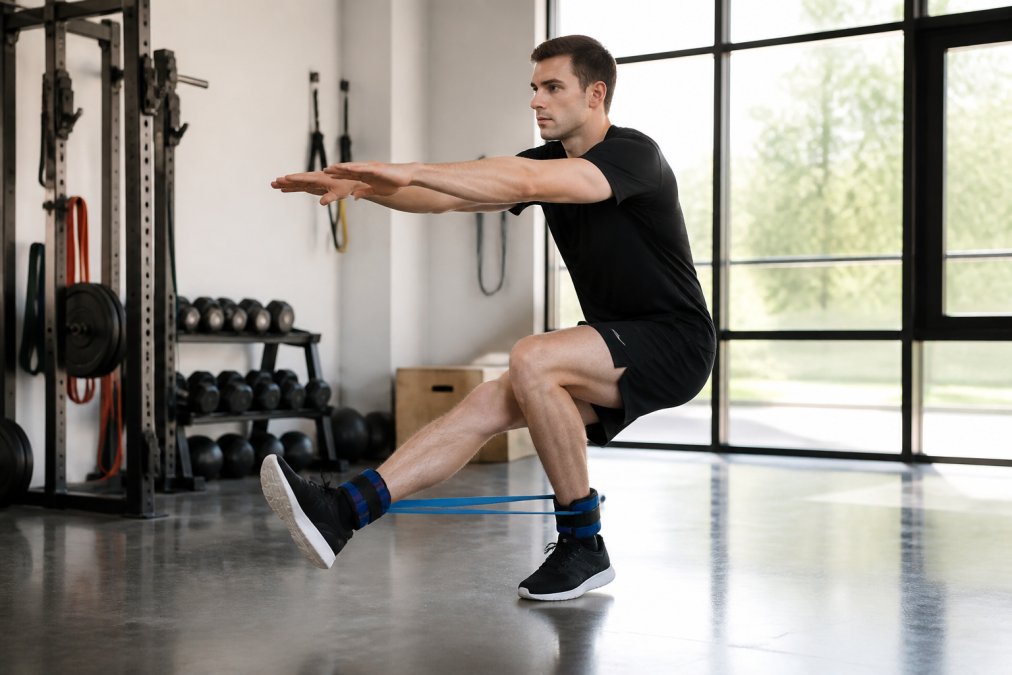
A cycling strength routine for muscular endurance differs from bodybuilding. The goal is sustained force production across hundreds of pedal strokes, not maximum hypertrophy. This means moderate loads, higher repetitions, and exercises mirroring cycling's unilateral demands.
Core exercises include single-leg squats, Romanian deadlifts, hip thrusts, and step-ups. Two sessions per week during base training, reducing to one during high-intensity blocks, is effective.
Big-Gear Intervals and On-Bike Strength Work
Big-gear intervals are underused. Shift to a harder gear, reduce cadence to 50 to 60 RPM, and sustain effort for 3 to 5 minutes. This forces high force per pedal stroke, directly training muscular endurance for climbs and headwinds. These intervals build power-to-weight ratio improvements without the cardiovascular stress of high-cadence threshold work, making them ideal during early base phases.
How Weighted Resistance Gear Supports Off-Bike Training
Off-bike strength work benefits from adjustable weighted resistance gear. Adjustable weighted wrist and ankle bands from Health and Fitness Company allow progressive loading of bodyweight movements, increasing stimulus as you adapt without requiring a full gym setup. Adjustability is key, fixed-weight options force you to either under-load early or over-load before connective tissue is ready. Adjustable bands let you scale precisely to current capacity.
According to the National Strength and Conditioning Association's position on resistance training for endurance athletes, progressive resistance training improves both peak force and fatigue resistance in endurance athletes, with direct carryover to cycling performance.
Best Cycling Recovery Techniques to Protect Long-Term Gains
Recovery is not passive. The best cycling recovery techniques are as structured and intentional as training sessions, and they determine whether training stress converts to adaptation or accumulates as fatigue.
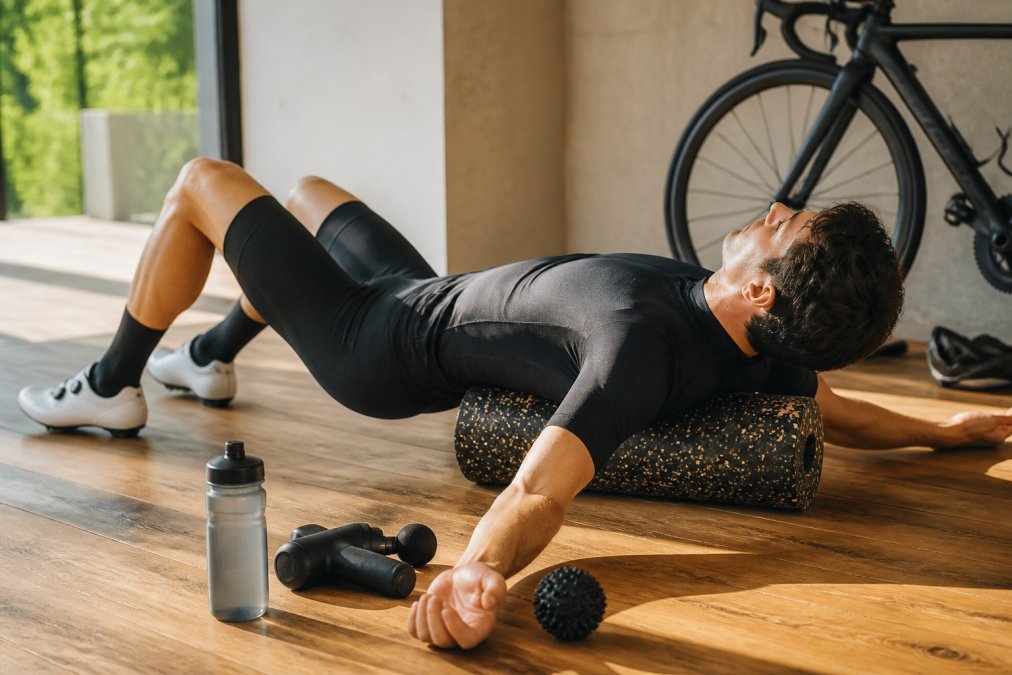
Fatigue management is the core skill. Most cyclists identify when they're tired; fewer distinguish productive training fatigue from accumulated fatigue. Tracking resting heart rate, sleep quality, and perceived exertion trends gives you data to make that distinction.
Recovery Technology Integration
Compression garments, percussion massage devices, and controlled cold exposure all have supporting evidence for accelerating muscular recovery. The most accessible and consistently effective tool remains sleep. Seven to nine hours of quality sleep per night is where the majority of physiological adaptation occurs.
Heart rate variability monitoring, available through most modern cycling computers and wearables, provides a daily readiness score reflecting your autonomic nervous system's recovery state. Many coaches now use HRV trends to adjust training load in real time, reducing injury risk and preventing overtraining.
Mental Resilience and Burnout Prevention
Burnout is often mistaken for a fitness plateau. The symptoms overlap: declining motivation, flat performances, persistent fatigue, and reluctance to train. A fitness plateau responds to training adjustments; burnout requires genuine rest and psychological recovery.
Track motivation levels alongside training data. When motivation scores drop consistently over two to three weeks, reduce volume before the body forces the issue. Incorporating different ride formats, gravel routes, or group rides breaks monotony that contributes to burnout. Reconnecting with why you ride, rather than fixating exclusively on metrics, sustains long-term engagement.
Cycling Nutrition Strategies for Endurance and Metabolic Efficiency
Cycling nutrition is built around one principle: fuel availability must match training demand. Under-fueling is the most common nutritional mistake among amateur cyclists.
Metabolic efficiency refers to your body's ability to use fat as fuel at higher intensities. Well-trained cyclists sustain moderate efforts primarily on fat oxidation, preserving glycogen for harder efforts. Building metabolic efficiency takes months of consistent base training combined with strategic carbohydrate management.
For sessions under 90 minutes at low-to-moderate intensity, many cyclists can train fasted or with minimal carbohydrate to promote fat adaptation. For sessions above 90 minutes, or any threshold or high-intensity work, adequate carbohydrate is non-negotiable for performance and recovery.
Post-ride nutrition timing matters. Consuming protein and carbohydrates within 30 to 60 minutes of finishing a hard session accelerates glycogen replenishment and muscle protein synthesis. Hydration is equally critical. Even mild dehydration impairs power output and cognitive function. Electrolyte replacement, particularly sodium, becomes important during rides exceeding two hours or in hot conditions.
According to the Academy of Nutrition and Dietetics' sports nutrition position statement, endurance athletes have significantly higher carbohydrate and protein requirements than sedentary individuals, scaling with training volume and intensity.
Equipment Trends That Affect Cycling Performance in 2026
Equipment alone won't make you faster, but wrong equipment will hold you back. The 2026 landscape has matured, and specific trends have measurable impact on real-world speed and cycling efficiency.
Aerodynamics, Tire Pressure, and Rolling Resistance
Aerodynamics dominates cycling speed above roughly 15 mph. Modern aero bikes, deep-section wheels, and form-fitting clothing reduce drag meaningfully. But gains are only realized if cycling biomechanics and position are optimized first. A poor fit on an aero bike is slower than a good fit on an endurance frame.
Tire pressure and rolling resistance are where many cyclists leave free speed. Lower pressures within the range appropriate for tire width and rider weight reduce rolling resistance by allowing tires to conform to road surface irregularities. Most modern road tires in the 28mm to 32mm range perform best at pressures considerably lower than maximum rating.
Tubeless tire setups further reduce rolling resistance and eliminate pinch flats, making them practical upgrades for riders logging significant miles.
Wireless Drivetrains and Handlebar Upgrades
Wireless drivetrains have become dominant at the performance end of the market. Cable elimination removes a friction point in shifting precision and simplifies cockpit routing. Battery life is measured in months of normal use.
Handlebar upgrades have direct impact. Alloy bicycle handlebars from Health and Fitness Company offer precision-engineered options to support your bodybuilding and training goals. The difference is most noticeable on rough roads and technical descents, where handlebar stiffness translates to steering confidence and reduced hand fatigue.
Handlebar width and drop depth affect aerodynamic position and comfort on long rides. Getting fit right before investing in other upgrades is the correct sequence.
| Equipment Upgrade | Primary Benefit | Best For |
|---|---|---|
| Tubeless tires | Lower rolling resistance, fewer flats | Road and gravel riders |
| Wireless drivetrain | Precise shifting, cleaner cockpit | Performance-focused cyclists |
| Alloy handlebars | Rigidity, control, reduced fatigue | Riders logging 40+ miles weekly |
| Aero helmet | Reduced drag at speed | Time trial and gran fondo events |
| Power meter | Training data accuracy | Structured interval training |
Improving your cycling performance in 2026 requires more than logging miles. It demands a structured approach integrating base training, smarter interval work, strength development, recovery discipline, fueling strategy, and equipment supporting your goals. Health and Fitness Company's precision-engineered adjustable weighted bands and alloy handlebars support this structured, goal-oriented training. Get started with Health and Fitness Company and build the foundation that makes every ride faster than the last.
Frequently Asked Questions
How do I boost cycling performance without adding more ride time?
Improving cycling performance without extra hours on the bike comes down to training quality over quantity. Adding two structured interval sessions per week targeting your lactate threshold, combined with a dedicated off-bike strength routine, builds power output and muscular endurance efficiently. Attention to recovery protocols and cycling nutrition strategies also compounds gains between sessions, meaning the hours you already ride produce better adaptations.
What are the most effective cycling training trends for 2026?
Polarized training models, which split most riding between low intensity and hard efforts with very little in the middle, are gaining traction for improving VO2max and FTP simultaneously. Heart rate variability tracking for smarter recovery decisions, integration of recovery technology like compression and sleep monitoring, and upgraded equipment choices including wireless drivetrains and optimized tire pressure for lower rolling resistance are all shaping how serious cyclists train in 2026.
How do I balance strength training with cycling for better results?
Schedule strength sessions on the same day as hard cycling intervals, not on recovery days. This keeps easy days genuinely easy, which is central to periodization. Focus your cycling strength training routine on compound movements: squats, lunges, and hip hinges that mirror cycling biomechanics. Two sessions per week is enough for most riders. Weighted resistance tools like adjustable ankle and wrist bands can add load to bodyweight movements without requiring a full gym setup.
What role does recovery play in long-term cycling gains?
Recovery is where adaptation actually happens. Training creates the stimulus; sleep, nutrition, and active recovery determine whether your body responds with improved power-to-weight ratio and aerobic capacity. Skipping recovery protocols is the most common reason cyclists plateau. Tracking heart rate variability gives you an objective signal of readiness, so you can adjust training volume on days when your body hasn't absorbed the previous workload yet.
This article was written using GrandRanker