Weight Resistance Training: 30+ Examples by Equipment

Table of Contents
- What Is Weight Resistance Training?
- Types of Resistance: Body Weight, Free Weights, Machines, and Bands
- Resistance Training Exercises for Major Muscle Groups
- Weight Training Exercises for Beginners
- Resistance Band Exercises for Full-Body Training
- Building a Full-Body Strength Training Workout
- Modifications for Different Fitness Levels and Mobility
- Frequently Asked Questions
Last Updated: October 6, 2026
What Is Weight Resistance Training?
Weight resistance training challenges your muscles against an opposing force, a dumbbell, your body weight, a band, or a machine, forcing them to contract, adapt, and grow stronger.
Weight resistance training isn't just for bodybuilders. It's a practical, science-backed way to build functional strength for daily life, from carrying groceries to climbing stairs.
The core principle: when you demand more from your muscles, they build new fibers and get stronger. This process, progressive overload, means gradually increasing resistance over weeks and months.
Types of Resistance: Body Weight, Free Weights, Machines, and Bands
Resistance training comes in four primary forms, each with distinct advantages.
Body Weight Resistance
Body weight resistance uses your own body as the load, no equipment required. Push-ups, squats, lunges, and planks all qualify, and it's ideal for beginners because you control intensity through range of motion or leverage.
A wall push-up is easier than a standard push-up, which is easier than a decline push-up, same exercise, different difficulty. Done with proper form and high reps, these exercises deliver real results.
The main limitation: as you grow stronger, body weight alone may not provide enough resistance.
Free Weights (Dumbbells, Barbells, Kettlebells)
Free weights, dumbbells, barbells, and kettlebells, give you complete control over the resistance, with no machine guiding the motion. That freedom engages more stabilizer muscles, making them highly effective for functional strength.
Dumbbells are the most versatile option, allowing independent movement of each arm so one side can't compensate for the other. The FIXTECH Adjustable Dumbbell Set with connector switches between dumbbell, barbell, kettlebell, and push-up stand modes instantly.

Kettlebells offset the weight from the handle, challenging your stabilizer muscles and core. A Cast Iron Kettlebell like our 10-pound option works multiple joints at once in swings and Turkish get-ups.
Barbells let you load heavy weight symmetrically, ideal for strength-focused lifts like squats and deadlifts.
Weight Machines
Weight machines guide your movement along a fixed path, a leg press, for example, lets you push weight away in a controlled arc. They're excellent for isolation work, targeting one muscle group without requiring stabilization.
Beginners often prefer machines because they're intuitive and safe, and the fixed path reduces injury risk from poor form. However, machines don't engage stabilizer muscles like free weights do, so use them alongside free weights.
Resistance Bands and Tubing
Resistance bands provide variable resistance that increases as you stretch further, so the hardest part of the movement comes at the end of the range, where your muscles are strongest (Effects of variable resistance training with different load ratios on lower-limb strength...).
Bands are portable, affordable, and joint-friendly. The Rubber Resistance Band Set with door anchor packs multiple resistance levels into one compact package for rehabilitation, warm-ups, and full-body training.
The Strength Resistance Band in natural latex offers pure, variable resistance for leg and hip exercises, yoga, and Pilates. Bands are also ideal for travel, they weigh almost nothing and fit in a suitcase.
| Resistance Type | Best For | Pros | Cons |
|---|---|---|---|
| Body Weight | Beginners, home workouts | Free, scalable, accessible | Limited load as you progress |
| Dumbbells | Balanced strength, home gyms | Versatile, independent movement | Requires multiple sets or adjustable pairs |
| Kettlebells | Full-body compound work | Engages stabilizers, portable | Steep learning curve for some movements |
| Barbells | Heavy strength training | Allows maximum load, symmetric | Requires rack, floor space, safety training |
| Machines | Isolation, beginners | Safe, intuitive, joint-friendly | Limited stabilizer engagement |
| Resistance Bands | Rehabilitation, portability | Lightweight, joint-friendly, variable resistance | Less intuitive for beginners |
Resistance Training Exercises for Major Muscle Groups
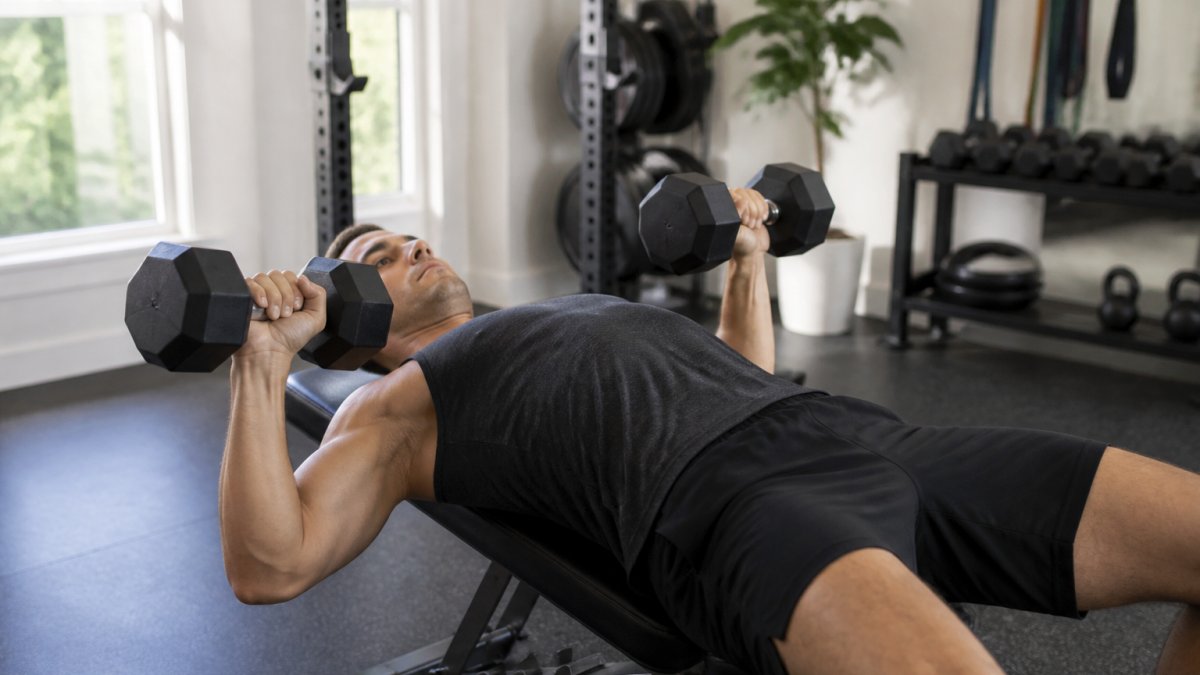
Effective weight resistance training targets all major muscle groups: chest, back, shoulders, arms, legs, and core. This prevents muscle imbalances and builds functional strength.
Upper-Body Pushing Exercises
Push-ups are the foundational upper-body pushing exercise, working chest, shoulders, and triceps simultaneously.
Chest presses with dumbbells or barbells isolate the chest while engaging stabilizers.
Shoulder presses build shoulder strength and stability. Standing or seated, you press weight overhead, engaging your core to prevent arching your lower back.
Tricep extensions target the back of your upper arm. Using a dumbbell, band, or barbell, you extend your arm against resistance to complement compound pushing exercises.
Upper-Body Pulling Exercises
Pull-ups and chin-ups are advanced pulling exercises requiring significant upper-body strength: grip a bar and pull your body upward.
Rows with dumbbells or barbells build back strength. Bent-over, single-arm, and machine rows train the same muscles with different patterns.
Lat pulldowns mimic the pull-up in a controlled setting, building pulling strength before you attempt full pull-ups.
Bicep curls isolate the front of your upper arm: bend your elbow and curl the weight toward your shoulder using dumbbells, a barbell, or a band.
Lower-Body Exercises
Squats are the king of lower-body exercises: feet shoulder-width apart, lower your hips as if sitting into a chair, then drive back up.
Lunges work one leg at a time, improving balance and addressing imbalances.
Leg presses let you load heavy weight safely: feet on a platform, push the weight away from your body.
Deadlifts are a full-body compound movement targeting hamstrings, glutes, and lower back. Standing with feet hip-width apart, lift a barbell from the ground, driving through your heels.
Calf raises target the back of your lower leg: standing or seated, rise onto your toes against resistance. The Pro 3-Piece Kettlebell Set works for weighted calf raises.

Core-Strengthening Exercises
Planks are an isometric core exercise: forearms on the ground, body in a straight line from head to heels, contract your core to prevent sagging.
Side planks work the obliques and lateral core.
Mountain climbers combine core work with cardio: in a push-up position, alternately drive your knees toward your chest in a running motion, building core strength and elevating your heart rate.
Leg raises work your lower abdominals: lying on your back, raise your legs to 90 degrees while keeping your lower back pressed to the floor.
Weight Training Exercises for Beginners
Beginners should start with intuitive, low-risk exercises to build a movement foundation before progressing to advanced variations.
FIXTECH Adjustable Dumbbell Set 20/30/50/70lbs Free Weight Set with Connector 4 →
Body weight squats teach proper squat mechanics without external load.
The HolaHatha 2, 3, and 5 Pound Neoprene Dumbbell Set is perfect for beginners: manageable light weights with a secure neoprene grip.
Resistance bands are beginner-friendly, forgiving and easy to control. The Fitness Resistance Band lets you perform assisted pull-ups, rows, and chest presses with less intensity than free weights.
Kettlebells can be intimidating, but a single 10-pound kettlebell teaches proper form without overwhelming load. Start with swings and goblet squats performed slowly.
Machine exercises are excellent for beginners because the fixed path prevents form mistakes.
Resistance Band Exercises for Full-Body Training
Chest Press with Band: Anchor the band behind you at chest height, hold with both hands, and press forward.
Band Rows: Anchor the band in front of you at chest height and pull toward your body, squeezing your shoulder blades together.
Leg Press with Band: Anchor the band low, loop it around your feet, and lie on your back.
Glute Kickbacks with Band: Loop the band around your foot and anchor point.
Building a Full-Body Strength Training Workout
A balanced full-body workout hits all major muscle groups in one session, ideal for beginners and intermediate lifters because it allows adequate recovery between sessions.
Choosing Appropriate Resistance and Progressive Overload
The right resistance challenges your muscles but lets you maintain perfect form. A good rule: finish your target reps with 1-2 reps left in reserve.
Progressive overload means gradually increasing the challenge over time, by adding weight, reps, sets, or decreasing rest. The 160Lb Adjustable Dumbbells Set with 16 weight levels makes it simple: adjust the dial and continue.

Track your workouts, weight, reps, and sets for each exercise. When you complete all sets with good form, increase the weight by 5-10 pounds.
Sample Beginner Routine
This routine works all major muscle groups with minimal equipment. Perform it three times per week with at least one rest day between sessions.
Warm-up (5 minutes):
- 2 minutes light cardio (walking, jumping jacks)
- Arm circles, leg swings, and bodyweight squats
Main Workout:
- Goblet Squats: 3 sets of 10 reps (use 10-15 lb kettlebell)
- Push-ups: 3 sets of 8-12 reps (modify as needed)
- Dumbbell Rows: 3 sets of 10 reps per arm (use 5-10 lb dumbbells)
- Dumbbell Chest Press: 3 sets of 10 reps (use 5-10 lb dumbbells)
- Planks: 3 sets of 20-30 seconds
- Dumbbell Bicep Curls: 2 sets of 10 reps (use 5-8 lb dumbbells)
Cool-down (5 minutes):
- Static stretching for major muscle groups
Rest 60-90 seconds between sets. Perform this routine consistently for 4-6 weeks before progressing to heavier weights or advanced variations.
Common Mistakes to Avoid
Skipping the warm-up increases injury risk and reduces performance.
Using momentum instead of control reduces effectiveness. Lower the weight slowly, 2-3 seconds for the eccentric phase.
Neglecting form for heavier weight is the biggest beginner mistake. Perfect form with light weight beats sloppy form with heavy weight.
Training the same muscle groups every day prevents recovery and growth. Muscles grow during rest, not during the workout.
Ignoring the lower body is common among beginners who focus on upper-body exercises. Leg training builds functional strength and prevents imbalances.
Modifications for Different Fitness Levels and Mobility
Weight resistance training can be adapted for any fitness level or physical limitation.
For beginners: Start with body weight or light resistance bands, focusing on proper form before adding load.
For advanced lifters: Use heavier weights, more volume, and advanced variations.
For older adults: Emphasize controlled movements, lighter weights, and balance work. Resistance bands are ideal, low-impact and joint-friendly.
For those recovering from injury: Work with a physical therapist to identify safe exercises.
At Health and Fitness Company, we've built our entire product line around making weight resistance training accessible and effective. Start with the routine we've outlined, stay consistent for 6-8 weeks, and you'll see real results. The American Heart Association recommends strength training at least twice per week for optimal health benefits, and our equipment makes that goal achievable at home.
Get started with Health and Fitness Company and build the strength you've been working toward.
Frequently Asked Questions
What are the top 5 resistance exercises everyone should do?
The most effective resistance training exercises target multiple muscle groups: squats (lower body and glutes), push-ups or chest presses (chest and shoulders), rows (back and biceps), lunges (legs and balance), and planks (core stability). These compound movements engage large muscle groups and burn more calories than isolation exercises. Starting with these five builds a strong foundation for any fitness level.
Can you do resistance training at home without weights?
Absolutely. Body weight resistance training is highly effective, push-ups, squats, lunges, planks, and mountain climbers all build strength without equipment. Resistance bands are affordable and portable, offering variable resistance for nearly every exercise. If you prefer dumbbells or kettlebells, adjustable options like the FIXTECH Adjustable Dumbbell Set ($227.74), which can be used as dumbbells, barbells, kettlebells, and push-up stands, provide multiple weight levels in minimal space, making home strength training accessible and practical.
How do I know if I'm using the right resistance for my fitness level?
Choose a resistance where you can complete 8-12 repetitions with proper form, with the final 2-3 reps feeling challenging but manageable. If you finish easily, increase the weight or resistance. If you cannot maintain form, reduce it. Beginners should start light and focus on technique before adding weight. As you build strength over weeks, gradually increase resistance, this progressive approach prevents injury and ensures steady muscle development.
What resistance band exercises are best for beginners?
Resistance band exercises like banded squats, chest presses, rows, and lateral raises are ideal for beginners because bands provide constant tension while being forgiving on joints. The Rubber Resistance Band Set ($33.66) offers five resistance levels from 2-4 lbs to 25-30 lbs, letting you start light and progress gradually. Bands also allow easy form adjustments mid-exercise, making them safer for learning proper technique.