Are Alloy Handlebars Good for Cyclocross? A 2026 Guide

Table of Contents
- Alloy vs Carbon Handlebars for Cyclocross: Crash Resilience and Cost
- Alloy Grades That Matter: 6061 vs 7050 vs 7075
- Cyclocross Handlebar Width and Flare: Dialing In Your Cockpit
- How to Prevent Handlebar Corrosion from Sweat and Mud
- Bar Tape Thickness and Vibration Damping on Alloy Bars
- Fatigue Life and Structural Integrity: When to Replace Alloy Bars
- Conclusion
- Frequently Asked Questions
Last Updated: September 25, 2026
Alloy vs Carbon Handlebars for Cyclocross: Crash Resilience and Cost
Cyclocross punishes equipment: mud, sand, roots, and shoulder-to-shoulder crashes all stress your cockpit. So are alloy handlebars good for cyclocross? For most riders, yes. Alloy bars survive crashes better, cost far less to replace, and hold up to a full race season.
Impact Resistance and Crash Replacement
Alloy handlebars handle impacts better than carbon because metal deforms rather than shattering. A carbon bar that takes a hard hit often fails without warning, while alloy gives visible signs, a dent or bend, so you know when to replace it.
Stiffness-to-Weight Ratio and Road Buzz
Carbon wins on stiffness-to-weight ratio: it's lighter and can be tuned to flex in specific directions, which helps with vibration damping.
Alloy Grades That Matter: 6061 vs 7050 vs 7075
The alloy grade decides how strong and stiff your bar feels. Most handlebars use one of three grades.
| Alloy Grade | Strength | Best For | Cost |
|---|---|---|---|
| 6061 | Moderate | Budget builds, beginners | Lowest |
| 7050 | High | All-round racing | Mid |
| 7075 | Highest | Stiffness-focused racers | Highest |
Cyclocross Handlebar Width and Flare: Dialing In Your Cockpit
Cyclocross handlebar width and flare change how your bike handles. Wider bars give more leverage through technical sections, while flare angles the drops outward, widening your stance and improving control on rough ground.
Drop Geometry, Reach, and Stack Height
Drop geometry, reach, and stack height decide your position. A shorter reach brings your hands closer, suiting a more upright cockpit; a deeper drop lets you get lower for headwinds and sprints.
How to Prevent Handlebar Corrosion from Sweat and Mud
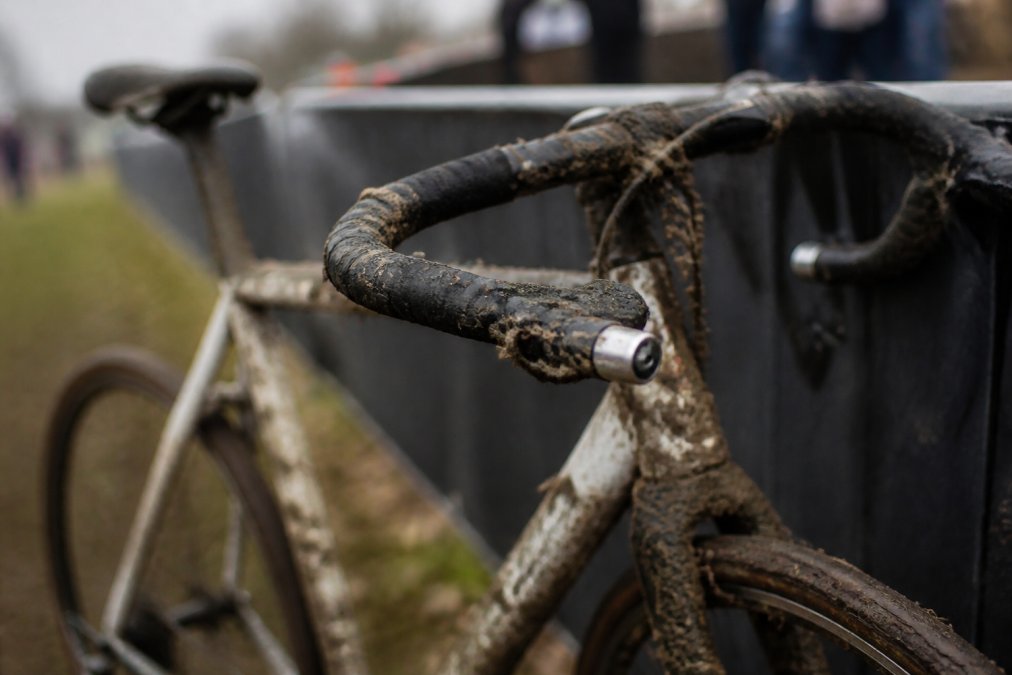
Sweat-induced corrosion is the quiet killer of alloy bars, and it's a bigger deal in cyclocross than almost any other discipline. A single muddy race leaves grit, water, and electrolyte-rich sweat packed against the bar under the tape and around the stem clamp, pitting the aluminum surface and trapping moisture at the highest-stress zone.
Where Alloy Bars Actually Corrode
Corrosion on a cyclocross bar is rarely uniform. It concentrates in a few predictable spots:
- Under the bar tape, where sweat wicks in and never dries out between races
- At the stem clamp, where two anodized or painted surfaces trap moisture and grit
- Around the bar-end plugs and shift/brake lever clamps, where the finish is already scuffed
- Along the tops, where your hands rest and deposit the most salt
A Practical Corrosion Routine
A few habits will meaningfully extend an alloy bar's life:
- Rinse with fresh water after every muddy or sweaty ride, not a pressure washer, which drives water into the clamp zone. A hose and a rag are enough.
- Dry the bar before it goes back in the garage. A wet bar in a humid garage corrodes faster than one that gets ridden dry the next day.
- Pull the tape once a season and inspect the tops and the area just outboard of the stem clamp, the only way to see corrosion hidden under tape.
- Loosen the stem clamp bolts, wipe the clamp faces, and re-torque to spec at the same interval. Grit trapped between the clamp and the bar is both a corrosion starter and a stress riser.
- Replace bar-end plugs when they get loose. A missing plug lets mud and water into the bar interior, where you cannot see the damage.
When Corrosion Becomes a Replacement Decision
Surface discoloration and light oxidation are cosmetic; pitting is not. If you can feel a pit with a fingernail, or see white, chalky deposits or dark speckling around the stem clamp or bar ends, that bar has moved from "maintain" to "replace." Same for any bar where anodizing has worn through to bare metal in a high-stress zone.
Aluminum corrosion and chloride pitting overview
Bar Tape Thickness and Vibration Damping on Alloy Bars
Pair thicker tape with ergonomic hoods and a well-set cockpit, and alloy comfort gets close to carbon for a fraction of the price.
Fatigue Life and Structural Integrity: When to Replace Alloy Bars
Fatigue life is the number of stress cycles a bar can take before it fails, and it's the most misunderstood part of the alloy-versus-carbon conversation. Most riders think in terms of one big impact, but your bar is loaded thousands of times per race, every root, remount, sprint out of a corner, and yank on the drops. Fatigue is what that accumulation does over a season.
How Aluminum Actually Fails
Aluminum doesn't have an infinite fatigue life the way steel does. Steel has an endurance limit: below a certain stress level, it can cycle essentially forever. Most aluminum alloys have no such floor, every stress cycle, no matter how small, consumes a little of the bar's life. That's why an alloy bar that survived three hard seasons isn't "proven"; it's closer to the end of its fatigue life than a newer bar, even if it looks perfect.
Alloy Grade Changes the Fatigue Picture
The grade of aluminum directly affects how many cycles your bar can take:
- 6061-T6 is the workhorse grade. It has moderate fatigue strength, good corrosion resistance, and it is forgiving of minor surface damage. For most cyclocross riders, a well-made 6061 bar is the sensible default.
- 7050-T6 is stronger and stiffer, with better fatigue performance than 6061 at the same weight. It is common in mid-to-high-end alloy bars where the goal is a higher stiffness-to-weight ratio without a carbon price tag.
- 7075-T6 has the highest tensile strength of the common bar grades, but it is also the least forgiving. It is more notch-sensitive than 6061 or 7050, meaning a scratch, a pit, or an over-torqued clamp bolt does more damage to its fatigue life. A 7075 bar that has been over-tightened or deeply scratched is a worse bet than a 6061 bar in the same condition.
What Shortens Fatigue Life in the Real World
A bar's rated fatigue life assumes a clean, undamaged part torqued to spec. Cyclocross rarely delivers that. The biggest life-shorteners are:
- Over-torqued stem clamp bolts, which crush the bar and create a stress riser at the clamp edge
- Sweat corrosion pitting, which acts as a crack initiation site (see the corrosion section above)
- Deep scratches or gouges from crashes, bar-end impacts, or careless bike transport
- Bar-end cuts that were not deburred after trimming
- Repeated hard crashes, even ones that leave no visible damage
A Practical Replacement Rule
- Inspect every few months during the season, and always after a crash. Pull the tape at least once a season so you can see the tops and the clamp zone.
- Replace immediately if you find a dent, a bend, a deep scratch, a crack, or pitting near the stem clamp or bar ends.
- Replace after any hard crash, even if the bar looks fine. A bar that took a serious impact has used up fatigue life you cannot see.
- Consider a time-based replacement for a bar that has seen several seasons of racing, even without visible damage. Alloy bars are inexpensive enough that this is cheap insurance.
If you want a dependable, affordable replacement, our Alloy Bicycle Handlebar is built from alloy for durability without the extra weight, with rubber lock-on grips for a secure hold. At $20.76, it costs less than most single carbon bar repairs, which is exactly why replacing an alloy bar on schedule is a realistic habit rather than a painful one.

Conclusion
Choosing the right handlebar comes down to matching your gear to how you actually ride, not to what looks fastest on paper. Alloy bars give cyclocross racers crash resilience, easy replacement, and honest durability, and with the right tape and setup, they ride comfortably too.
Frequently Asked Questions
What are the primary benefits of using alloy handlebars for cyclocross?
Alloy handlebars are cheaper to replace after a crash, resist impact damage better than carbon in most low-speed falls, and hold up to mud and sweat with the right finish. For cyclocross racing, where crashes happen often, an alloy bar lets you remount and keep racing without worrying about hidden carbon cracks. They also cost less, so a mid-season replacement does not break your budget.
Do alloy handlebars provide enough vibration damping for rough cyclocross courses?
Alloy transmits more road buzz than carbon, but cyclocross courses run on grass, dirt, and mud rather than chattery pavement, so the difference is smaller than on a road bike. Thicker bar tape (3.0 mm to 3.5 mm) and gel inserts absorb most of the remaining vibration. Many riders find a well-taped alloy bar comfortable enough for 45-minute to one-hour races.
How do alloy handlebars compare to carbon fiber in crash-prone cyclocross conditions?
Carbon can crack internally on impact and fail later without visible warning, while alloy usually dents or bends in a way you can see and feel immediately. That makes alloy the safer choice for beginners and anyone racing in tight packs. Carbon is lighter and damps vibration better, but the weight gap is small (often 50-100 grams) compared with the cost and risk difference.
What should I look for when selecting alloy drop bars for cyclocross?
Check the alloy grade (6061 is common and affordable, 7050 and 7075 are stronger), the width (usually 40-44 cm measured center to center), the flare (4-12 degrees helps with control in mud), and the drop and reach. Look for an anodized or sand-blast finish that resists sweat corrosion, and confirm bar end compatibility with your levers and grips before buying.