Best Durable Alloy Handlebars for Long Distance

Table of Contents
- Why Durable Alloy Handlebars Matter for Long-Distance Riding
- Alloy vs Carbon Handlebars for Touring: What You Need to Know
- How to Choose Bike Handlebars for Comfort on Long Rides
- Handlebar Flare Explained: Geometry for Stability and Control
- Top Durable Alloy Handlebars for Long-Distance Touring
- Installation, Setup, and Compatibility with Modern Cockpit Electronics
- Comparison Table: Handlebar Width, Sweep Angles, and Clamping Diameter
- Conclusion
Last Updated: August 15, 2026
Why Durable Alloy Handlebars Matter for Long-Distance Riding
Long-distance cycling demands equipment that withstands hundreds of miles of varied terrain and cumulative stress. Durable alloy handlebars have become the standard for serious cyclists because they deliver structural integrity and repairability that carbon alternatives cannot match in remote locations. Unlike carbon fiber, which fractures catastrophically, aluminum alloy degrades predictably, giving riders warning signs before failure.
When you're 150 miles from the nearest bike shop, this distinction matters most. A cracked carbon bar requires replacement; a bent aluminum bar can be straightened, wrapped, or reinforced and continue functioning. This practical durability is why touring cyclists consistently choose alloy over lighter materials. The weight penalty, typically 50-100 grams heavier than carbon, buys peace of mind across thousands of miles.
Health and Fitness Company's precision-engineered alloy bicycle handlebars are specifically designed for long-distance touring, combining structural reliability with ergonomic geometry that reduces hand fatigue on extended rides.

Alloy vs Carbon Handlebars for Touring: What You Need to Know
The choice between alloy and carbon handlebars shapes your entire long-distance experience. Alloy wins on durability, repairability, and long-term cost. Carbon wins on weight and vibration damping. For touring cyclists, the equation shifts decisively toward alloy.
Fatigue Resistance and Structural Integrity
Aluminum alloy handlebars excel in fatigue resistance because the material's behavior under repeated stress is predictable and well-understood. Every bump, steering input, and weight shift creates a small stress cycle on the handlebar. Over thousands of miles, these cycles accumulate.
Aluminum alloy exhibits "graceful degradation." The material bends slightly under stress, then returns to shape. Repeated stress causes gradual work-hardening, but this process is slow and visible. You'll notice the bar feeling slightly less responsive before any structural failure occurs. Carbon fiber shows no warning signs, it remains stiff until a crack propagates, at which point failure is sudden and complete.
Quality aluminum alloys (6061 or 7075 grades) used in bicycle components have tensile strength ranging from 40,000 to 73,000 PSI. This is lower than carbon fiber, but the margin of safety built into handlebar design more than compensates. A properly engineered alloy bar will outlast three carbon bars in a touring context simply because it survives impacts and stress reversals that would damage carbon.
Repairability in Remote Locations
This is where alloy becomes indispensable for long-distance touring. A bent alloy handlebar can be straightened with basic tools, a rubber mallet, wooden block, and a few minutes of work. A cracked carbon bar cannot be repaired in the field. Remote locations lack bike shops with carbon bars in stock. A local mechanic can likely straighten an aluminum bar; they cannot repair carbon. This practical reality has driven handlebar choice decisions for expedition cyclists for decades.
How to Choose Bike Handlebars for Comfort on Long Rides
Comfort on long-distance rides depends less on material choice and more on geometry. The right handlebar geometry matches your body position and provides hand position variety.
Reach, Stack Height, and Hand Position Variety
Reach and stack height define how far forward and how high the handlebar sits relative to the saddle. Reach is measured from the center of the bar clamp to the furthest point of the bar; stack height measures the vertical distance from the clamp to the bar's highest point.
For long-distance comfort, reach should allow your arms to extend comfortably without locking elbows or creating excessive shoulder strain. Stack height affects back angle, higher stack supports a more upright position, reducing lower back strain during extended riding. Lower stack creates a more aggressive, aerodynamic position.
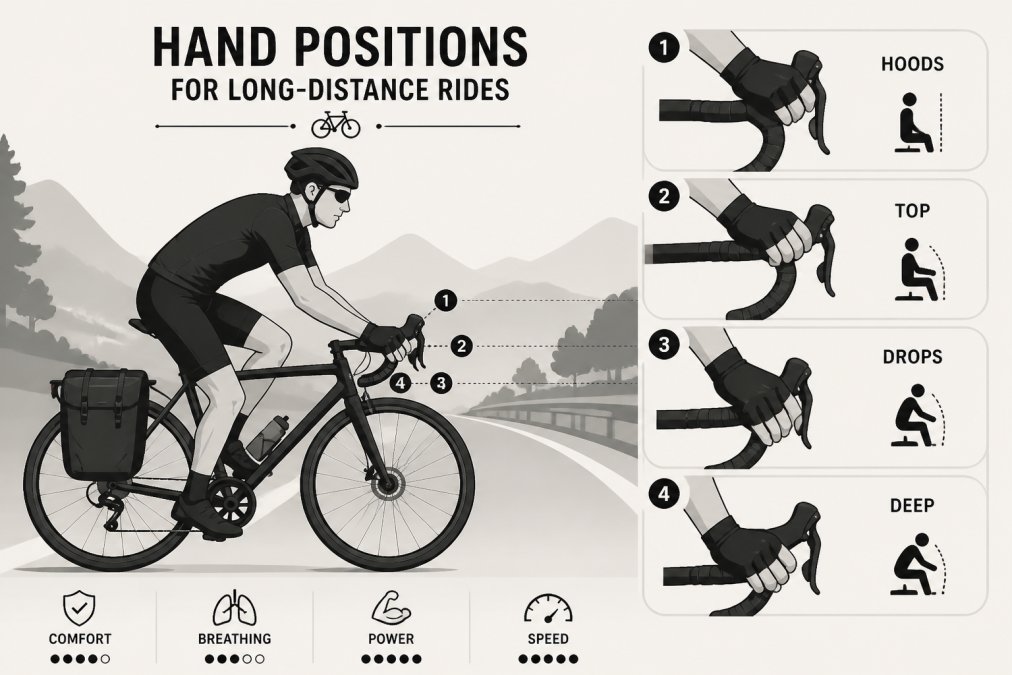
Hand position variety is equally critical. The best touring handlebars offer multiple hand positions, drops, hoods, and tops, so you can shift hand placement every few miles. This variation distributes pressure across different parts of your hands and prevents localized numbness. Drop bars dominate long-distance touring because they offer more hand position variety than flat or riser bars.
Vibration Damping and Hand Numbness Prevention
Vibration damping is the handlebar's ability to absorb road vibrations and prevent them from reaching your hands. High-frequency vibrations from road texture create the hand numbness that plagues long-distance riders. This condition, sometimes called handlebar palsy, results from sustained pressure and vibration on the median and ulnar nerves.
Aluminum alloy handlebars provide moderate vibration damping through the material's inherent characteristics. Carbon fiber damps vibrations slightly better, but the difference is marginal compared to other factors. Bar tape, gloves, and hand position changes have far more impact on hand numbness than the choice between alloy and carbon.
The real solution is combining three strategies: varying your hand position frequently, using padded gloves, and wrapping the bar with quality bar tape that absorbs vibration. A durable alloy handlebar wrapped in cork or foam tape will feel more comfortable on a 100-mile ride than an expensive carbon bar with minimal padding.

Handlebar Flare Explained: Geometry for Stability and Control
Handlebar flare describes the angle at which the bar rises or sweeps back toward the rider. Back sweep is the angle the bar curves backward toward the rider; most touring handlebars have 10-15 degrees of back sweep, positioning your hands closer to your body and reducing reach strain. Up sweep is the angle the bar rises toward the ends, typically 4-8 degrees, which lifts your hands slightly and reduces palm pressure.
The combination of back sweep and up sweep creates flare geometry that improves control on singletrack sections and gravel descents. The upward curve also provides a natural grab point if you need to stand on the pedals or shift weight quickly. For long-distance touring on mixed terrain, a handlebar with moderate flare (12 degrees back sweep, 6 degrees up sweep) offers the best balance between control and comfort.
Top Durable Alloy Handlebars for Long-Distance Touring
Health and Fitness Company Alloy Bicycle Handlebar: Precision-Engineered Reliability
Health and Fitness Company's alloy bicycle handlebar is constructed from high-grade aluminum alloy, prioritizing structural integrity and fatigue resistance. The design incorporates moderate flare geometry, approximately 12 degrees back sweep and 6 degrees up sweep, that provides multiple hand positions for comfort across long distances.
The clamping diameter is 31.8mm, the current standard for most modern road and gravel bikes. This diameter accommodates electronic shifters, computers, and lights without requiring adapters. The handlebar width spans 42cm, a versatile size for riders with shoulder widths from 16 to 18 inches. The rise measures approximately 20mm, providing enough elevation for comfort without sacrificing aerodynamics.
At $20.76, the Health and Fitness Company alloy bicycle handlebar delivers exceptional value for touring cyclists. The precision-engineered construction ensures consistent performance across thousands of miles. The material's predictable fatigue characteristics mean you'll understand how the bar behaves under stress, a critical advantage when far from technical support.
The handlebar's compatibility with modern cockpit electronics, electronic shifters, integrated computers, and smart sensors, means you can build a complete integrated system without concerns about adapter reliability. The clamping surface is finished to tight tolerances, preventing shifter creep during long rides.
Material Grades and Weight vs. Durability
The most common aluminum alloy grades in bicycle handlebars are 6061 and 7075. The 6061 alloy offers excellent workability and corrosion resistance, with tensile strength around 40,000 PSI. The 7075 alloy is stronger at 73,000 PSI, but is more brittle and prone to stress cracking if the bar design includes sharp corners.
For long-distance touring, 6061 alloy is a good choice. The slightly lower strength is more than adequate for handlebar duty, and the superior toughness means the bar can survive impacts without cracking. A touring cyclist might hit a pothole or drop the bike during setup; a 6061 bar absorbs that impact without developing a hidden crack.
Weight differences between alloy grades are minimal, typically 10-20 grams. The weight penalty compared to carbon is real: a carbon drop bar weighs around 150 grams, while a comparable alloy bar weighs 220-240 grams. Over a 3,000-mile tour, that 90-gram difference is negligible compared to the reliability advantage.
Quality alloy handlebars are anodized, an electrochemical process that creates a protective oxide layer on the aluminum surface. This finish resists corrosion from sweat, rain, and road salt. A properly anodized bar maintains structural integrity through years of touring in varied climates. Carbon bars can delaminate if moisture penetrates the resin layers, a slow degradation that's invisible until failure.
Installation, Setup, and Compatibility with Modern Cockpit Electronics
Installing a new handlebar requires attention to clamping diameter, reach, and electronic compatibility. The process takes 20-30 minutes and involves removing the stem, sliding off the old bar, and installing the new one.
The critical measurement is clamping diameter, the diameter of the bar where it clamps into the stem. Modern bikes use 31.8mm diameter bars, though some older bikes use 26.0mm. The Health and Fitness Company alloy handlebar uses the 31.8mm standard, compatible with virtually all modern road and gravel bikes manufactured after 2010.
Electronic compatibility requires attention to shifter and computer mounting points. The Health and Fitness Company handlebar's smooth, consistent diameter accommodates electronic shifters without adapters. The clamping surface is finished to prevent shifter creep, the gradual movement of electronic shifters during rides that can misalign shifting.
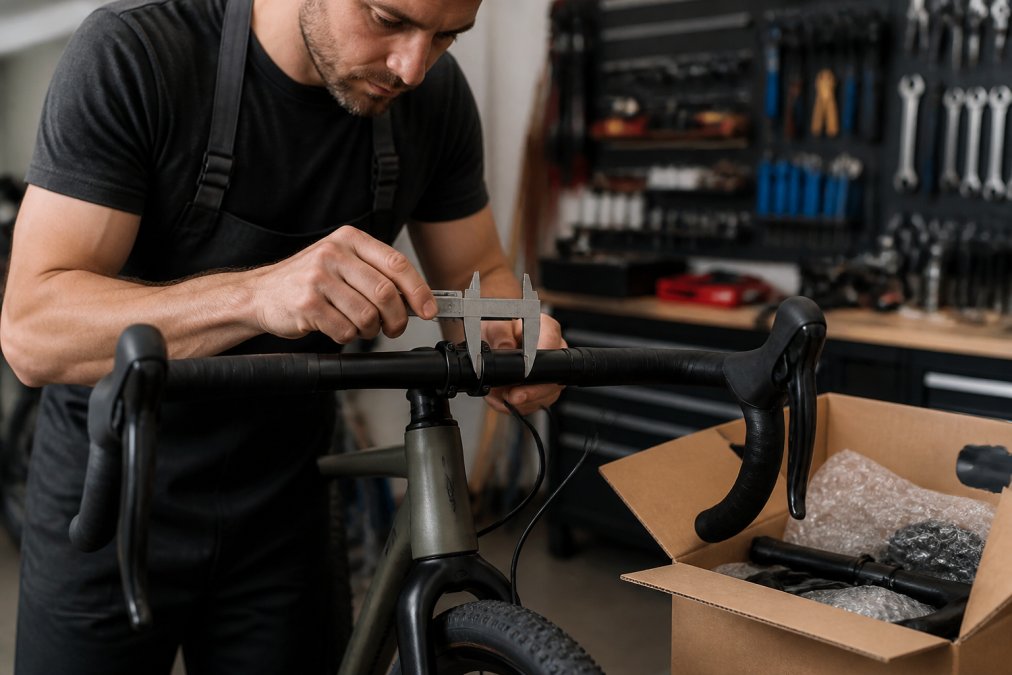
Before installation, check that your stem's clamp bolts are rated for your bar diameter. Torque specifications typically range from 8-12 Newton-meters for aluminum bars. Over-tightening crushes the bar's internal structure; under-tightening allows movement. Ensure your new bar is compatible with your bike's cable routing system before installation.
Comparison Table: Handlebar Width, Sweep Angles, and Clamping Diameter
| Feature | Health and Fitness Company Alloy Bar | Typical Carbon Drop Bar | Budget Alloy Bar |
|---|---|---|---|
| Material | 6061 Aluminum Alloy | Carbon Fiber Composite | 7075 Aluminum Alloy |
| Width | 42cm | 40-44cm range | 42cm |
| Back Sweep | 12 degrees | 8-14 degrees | 10 degrees |
| Up Sweep | 6 degrees | 4-8 degrees | 4 degrees |
| Clamping Diameter | 31.8mm | 31.8mm | 31.8mm |
| Weight | 230 grams | 155 grams | 235 grams |
| Price | $20.76 | $80-150 | $12-18 |
| Repairability | Field-repairable | Requires replacement | Field-repairable |
| Vibration Damping | Moderate | Good | Moderate |
| Fatigue Resistance | Excellent | Good | Fair |
The choice between durable alloy handlebars for long distance and alternatives comes down to your priorities. If you're riding 100 miles or less on established routes with bike shops nearby, carbon's weight advantage might justify the cost and fragility. If you're planning serious touring or multi-week trips into remote areas, alloy's repairability and predictable fatigue characteristics become non-negotiable.
Health and Fitness Company's alloy bicycle handlebar represents an engineered solution for this use case. The precision-engineered design balances comfort, durability, and cost in a package that works across thousands of miles of varied terrain. The moderate flare geometry provides multiple hand positions, the 6061 alloy construction ensures fatigue resistance, and the 31.8mm clamping diameter integrates seamlessly with modern cockpit electronics.
Get started with the Health and Fitness Company alloy bicycle handlebar and experience the reliability that transforms long-distance touring from an endurance test into a sustainable adventure. The bar's predictable performance and field repairability mean you'll spend more time riding and less time worrying about equipment failure. Bicycle touring guides from Adventure Cycling Association emphasize handlebar reliability as a core consideration for multi-week tours, and alloy's proven track record across decades of expedition cycling reinforces this priority.
For cyclists serious about long-distance touring, the investment in quality alloy handlebars pays dividends across every ride. The weight penalty disappears when carrying touring gear. The repairability becomes invaluable when far from supply chains. The durability compounds over years of riding, making alloy a strong economical choice for serious distance work.
Consider pairing your new handlebar with ergonomic cycling gloves from expert reviews to further reduce hand fatigue, and ensure your bar tape provides adequate cushioning for vibration absorption. Touring cyclists who have switched to quality alloy handlebars often report improved confidence on technical terrain, reduced hand numbness on extended rides, and peace of mind knowing their equipment can be repaired in remote locations. Long-distance cycling research from the Journal of Sports Sciences documents the significant impact of handlebar geometry and material choice on rider comfort and performance across extended efforts.
The durable alloy handlebar represents the mature, proven choice for serious touring. Carbon remains the weight-weenie option; alloy is a strong choice for reliability. Your long-distance riding will benefit from that engineering priority.
Frequently Asked Questions
Are aluminum handlebars durable enough for heavy touring?
Yes. Aluminum alloy handlebars, especially those made from 6061 or 7075 aluminum, offer excellent fatigue resistance for long-distance touring. Their tensile strength and impact resistance make them reliable for remote travel where repairability matters. Unlike carbon fiber, aluminum can be straightened or repaired with basic tools in the field, a critical advantage on extended trips far from bike shops.
What is the difference between 6061 and 7075 aluminum handlebars?
6061 aluminum is lighter and more corrosion-resistant, making it ideal for general touring. 7075 aluminum is stronger and more fatigue-resistant, better for aggressive riding or heavier loads. For long-distance comfort, 6061 balances weight and durability. 7075 costs more but suits riders who prioritize structural integrity on extreme terrain or multi-week expeditions carrying heavy bikepacking bags.
How do flared handlebars improve long-distance comfort?
Flare angles increase hand position variety by angling the bar ends outward, reducing wrist strain during extended rides. This geometry lets you shift hand position frequently, distributing pressure across different areas and reducing hand numbness and fatigue. Flared bars also improve control on singletrack and gravel sections, making them excellent for mixed-terrain touring where comfort and stability are both essential.
What handlebar width should I choose for long-distance riding?
Choose handlebar width based on shoulder width and riding style. Wider bars (700-760mm) offer better leverage and control on rough terrain but add weight. Narrower bars (600-680mm) are lighter and more aerodynamic. For long-distance touring, aim for bars slightly wider than shoulder width to reduce fatigue and improve stability when fatigued. Test different widths if possible before committing.
This article was written using GrandRanker