Top 5 Resistance Exercises for Strength

Table of Contents
- The Top 5 Resistance Exercises That Build Real Strength
- 1. The Squat: Lower-Body Foundation
- 2. The Deadlift: Full-Body Power
- 3. The Push: Chest, Shoulders, and Triceps
- 4. The Pull: Back and Bicep Strength
- 5. The Horizontal Row: Posture and Upper-Body Endurance
- Resistance Exercises for Beginners: Starting Your Journey
- Building a Full-Body Resistance Workout
- Frequently Asked Questions
Last Updated: October 4, 2026
The Top 5 Resistance Exercises That Build Real Strength
Why These Five Exercises Matter
Not all resistance exercises deliver equal results. The five movements here form the foundation of effective strength training because they engage multiple muscle groups at once, demand proper technique, and scale with your fitness level.
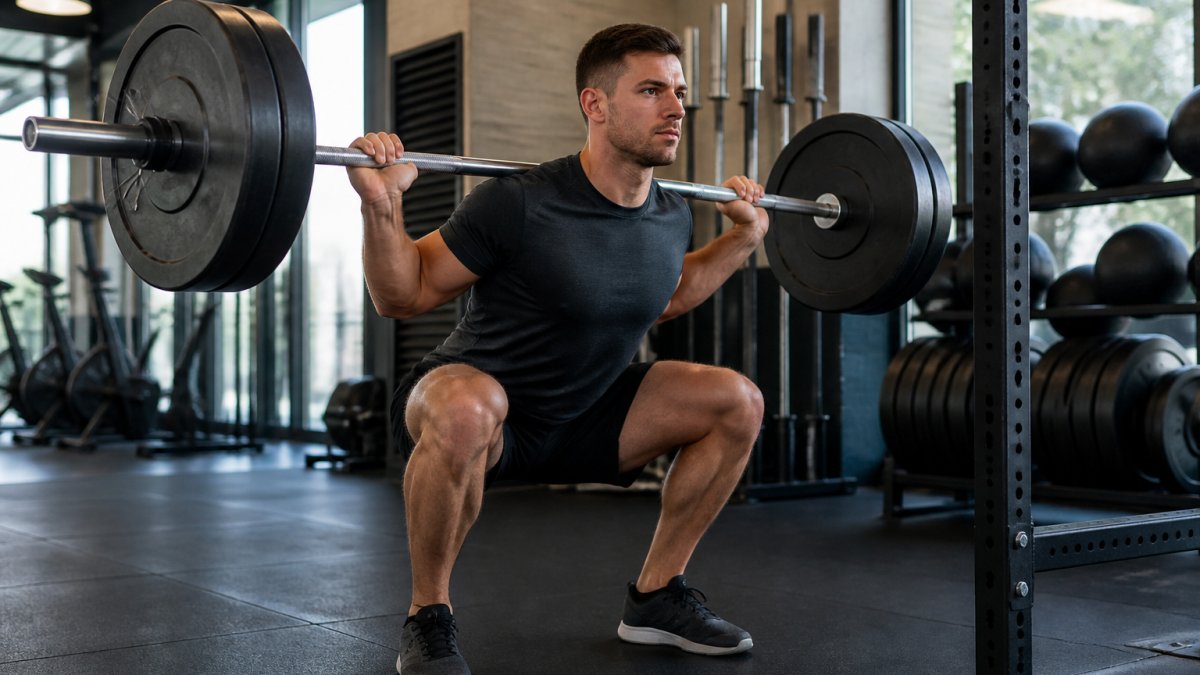
These compound movements burn more calories and build more functional strength than isolation exercises alone, forming the backbone of any effective program.
1. The Squat: Lower-Body Foundation
The squat engages your quads, glutes, hamstrings, and core in one movement, building leg strength, mobility, and knee and hip stability.
How to Perform a Squat Safely
Stand with your feet shoulder-width apart. Keep your chest up and your weight in your heels. Lower your body by bending at the knees and hips simultaneously, as if sitting back into a chair. Descend until your thighs are parallel to the ground or slightly below. Drive through your heels to return to standing.
Keep your knees tracking over your toes and your core tight throughout the movement, as if bracing for a punch.
Squat Variations for Different Fitness Levels
Beginners should start with bodyweight squats using a chair or bench for reference. Once you can perform 15-20 with control, add light dumbbells held at your sides.
For intermediate lifters, goblet squats force better posture and increase difficulty without requiring a barbell.
Advanced lifters should progress to barbell back squats. The American College of Sports Medicine guidelines recommend barbell squats as a primary resistance exercise for building lower-body strength. Start light and focus on depth and control before adding significant weight.
2. The Deadlift: Full-Body Power
The deadlift works your legs, back, glutes, and core in one movement, building raw strength and teaching safe heavy lifting.
Proper Deadlift Form and Progression
Start with the bar on the ground. Stand with your feet hip-width apart, with the bar over the middle of your foot.
Drive through your heels and extend your hips and knees simultaneously. The bar should travel in a straight line close to your body. At the top, your hips and shoulders should be fully extended.
Beginners should start with trap bar or dumbbell deadlifts, which are easier on the lower back. Progress to the barbell version once you develop strength and coordination.
Poor form leads to serious injury. If new to this movement, learn it with light weight and consider working with a coach for your first few sessions.
3. The Push: Chest, Shoulders, and Triceps
Pushing exercises, bench press, push-ups, or overhead press, strengthen your chest, shoulders, triceps, and core.
Bench Press and Push-Up Progressions
The barbell bench press is the gold standard for upper-body pushing power. Lie on a bench with your feet flat on the floor. Grip the bar slightly wider than shoulder-width. Lower the bar to your chest, then press it back up to the starting position.
For beginners, start with incline push-ups on a bench or wall, progress to knee push-ups, then full push-ups.
The Seamless Push Up Board from Health and Fitness Company offers 14 positions to target different muscle groups and adjust difficulty as you progress.
Once you can do 20 bodyweight push-ups, add load using dumbbells or a weighted vest.
4. The Pull: Back and Bicep Strength
Pulling movements build your back, biceps, and grip strength while balancing pushing movements and preventing shoulder injuries.
Rows and Pull-Up Variations
The horizontal row is easier to learn than the pull-up and builds serious back strength. Bend at the hips, keep your back straight, and pull the weight toward your torso, squeezing your shoulder blades together.
Pull-ups are harder but worth the effort. Hang from a bar with hands shoulder-width apart, pull yourself up until your chin clears the bar, and lower with control.
If pull-ups are too difficult, use a resistance band for assistance by looping it around the bar and placing your feet or knees in the other end.
The Rubber Resistance Band Set from Health and Fitness Company includes multiple resistance levels and accessories for pull-up assistance and other exercises.
5. The Horizontal Row: Posture and Upper-Body Endurance
The horizontal row strengthens your back muscles, improves shoulder stability, and counters the effects of prolonged sitting.
Rows can be performed with a barbell, dumbbells, resistance bands, or a machine. Pull the weight toward your torso, focusing on squeezing your back muscles.
Resistance bands make rows accessible for beginners and provide constant tension throughout the movement. As you get stronger, add weight or increase band resistance.
Resistance Exercises for Beginners: Starting Your Journey
Bodyweight Alternatives and Calisthenics
Bodyweight resistance exercises teach proper movement patterns and build a foundation for heavier training.
FIXTECH Adjustable Dumbbell Set 20/30/50/70lbs Free Weight Set with Connector 4 →
Start with these movements:
- Bodyweight squats (15-20 reps)
- Push-ups or incline push-ups (8-15 reps)
- Rows using a sturdy table or bar (8-15 reps)
- Glute bridges (15-20 reps)
- Planks (30-60 seconds)
These movements require no equipment and can be done at home. Focus on proper form over speed or reps; slow, controlled movements build more strength and reduce injury risk.
When to Add External Load
Once you can perform 15-20 controlled bodyweight squats, 12-15 push-ups, and 12-15 rows, start with dumbbells in the 5-10 pound range or a resistance band.
The 5, 10, and 15 Lb Neoprene Dumbbell Set from Health and Fitness Company is ideal for beginners. The neoprene coating protects your floors, the hex shape prevents rolling, and the included rack keeps your space organized. The price point makes it accessible without sacrificing quality.
As you progress, the FIXTECH Adjustable Dumbbell Set offers more versatility. It functions as dumbbells, barbells, kettlebells, and push-up stands in one system, growing with your training needs.

Building a Full-Body Resistance Workout
Sample Weekly Routine Structure
A simple, effective program trains each major movement pattern 2-3 times per week. This frequency allows adequate recovery while building strength consistently. Here's a basic structure:
| Day | Focus | Exercises | Duration |
|---|---|---|---|
| Monday | Lower Body | Squat, Deadlift, Row | 45-60 minutes |
| Wednesday | Upper Body | Push, Pull, Row | 45-60 minutes |
| Friday | Full Body | Squat, Push, Pull, Row | 45-60 minutes |
Alternatively, a three-day full-body split hits all major movement patterns on each training day, which is ideal for beginners and intermediate lifters. This approach distributes volume evenly and allows more frequent practice of each movement.
Warm-Up and Cool-Down Protocol
Begin each session with 5-10 minutes of light cardio to increase heart rate and blood flow. This can be walking, light jogging, cycling, or rowing. Follow with 5-10 minutes of dynamic stretching that mimics the movements you'll perform: arm circles, leg swings, bodyweight squats, and push-ups. This preparation increases core temperature, activates stabilizer muscles, and reduces injury risk.
End each session with 5-10 minutes of static stretching, holding each stretch for 20-30 seconds. Focus on muscles you trained that day: quads, hamstrings, chest, shoulders, and back. Static stretching after training improves mobility and reduces soreness.
Sets, Reps, and Rest Periods by Goal
For Strength Building (1-6 reps): Use heavy weight that allows 1-6 repetitions with good form. Rest 3-5 minutes between sets (Checking your browser). This rep range recruits maximum muscle fibers and builds raw strength.
For Muscle Building (6-12 reps): Use moderate weight that allows 6-12 repetitions with good form. Rest 2-3 minutes between sets. This rep range balances strength and muscle growth. Perform 3-4 sets per exercise.
For Muscle Endurance (12-15+ reps): Use lighter weight that allows 12-15 or more repetitions with good form. Rest 60-90 seconds between sets.
Tempo and Pauses: Control the pace of each repetition. Spend 2-3 seconds lowering the weight (eccentric phase), pause for 1 second at the bottom, then spend 1-2 seconds lifting (concentric phase).
Progressive Overload Strategy
Progressive overload, gradually increasing the demand on your muscles, is the key to continuous improvement. Never increase weight and reps simultaneously; pick one variable to progress each week.
Week 1-2: Establish a baseline. Perform your chosen exercises for 3 sets of 8-10 reps at a weight that feels moderately challenging.
Week 3-4: Increase reps by 1-2 per set while keeping weight the same. If you performed 3 sets of 8 reps last week, aim for 3 sets of 9-10 reps this week.
Alternative Progressions: If adding weight isn't possible (limited equipment), increase sets (from 3 to 4), decrease rest periods (from 2 minutes to 90 seconds), or add an extra training day per week.
Deload Weeks and Recovery
Every 4-6 weeks, reduce volume by 40-50% for one week. This means performing fewer sets, fewer reps, or lighter weight. A deload week allows your nervous system and connective tissues to recover fully, which prevents overuse injuries and mental burnout. You'll return to training stronger and more motivated.
On non-training days, prioritize sleep (7-9 hours per night), eat adequate protein (0.7-1 gram per pound of body weight), and manage stress. Recovery is where adaptation happens; training is the stimulus.
Adjusting Your Program Over Time
After 4-6 weeks: If you've been following a three-day full-body routine, you may want to split into upper-body and lower-body days to increase volume and specialization. This allows more exercises per muscle group and longer recovery between sessions.
After 8-12 weeks: If progress stalls, change exercises. Swap barbell squats for goblet squats, or dumbbell rows for machine rows. New movements stimulate muscles differently and break through plateaus.
If you miss sessions: Don't try to "catch up" by doing extra volume the next session. Simply resume your normal routine.
According to research on resistance training frequency, training each muscle group 2-3 times per week produces optimal strength gains for most people. More frequent training doesn't always produce better results; recovery is where adaptation happens.
Frequently Asked Questions
What are the best resistance exercises for beginners?
The top five resistance exercises for beginners are squats, deadlifts, push-ups, rows, and horizontal rows. These compound movements engage multiple muscle groups and build foundational strength. Start with bodyweight versions or light resistance bands before adding dumbbells. The Rubber Resistance Band Set ($33.66) is ideal for beginners because it offers adjustable resistance levels and comes with an ankle strap and door anchor for versatile exercises.
How often should you do resistance exercises?
Most fitness guidelines recommend resistance training 2-3 days per week for beginners, with at least one rest day between sessions. Intermediate and advanced lifters can train 3-5 days weekly using a split routine that targets different muscle groups on different days. This frequency allows adequate recovery while building consistent strength and muscle development over time.
How many sets and reps should you do for strength training?
For strength building, perform 3-4 sets of 4-6 repetitions with moderate to heavy resistance. For muscle building and endurance, use 3-4 sets of 8-12 repetitions. Rest 2-3 minutes between heavy strength sets and 60-90 seconds between moderate sets. Beginners should start with 2-3 sets of 10-12 reps to learn proper form before increasing intensity.
Can you build strength with resistance bands?
Yes, resistance bands build genuine strength when used with proper tension and progressive overload. Bands offer variable resistance that increases at the top of each movement, challenging muscles differently than free weights. The Rubber Resistance Band Set with five resistance levels (2-4 lbs to 25-30 lbs) allows progressive training suitable for all fitness levels and works for all five major resistance exercises.
What equipment do I need to perform the top 5 resistance exercises?
For the top five resistance exercises, you need dumbbells or kettlebells, a barbell, and either a bench or stable surface. The FIXTECH Adjustable Dumbbell Set ($227.74) converts into dumbbells, barbells, kettlebells, and push-up stands in one package. The Pro 3-Piece Kettlebell Set ($99.99) covers kettlebell work, and the Seamless Push Up Board ($38.72) adds variety to upper-body training without requiring additional equipment.