Weighted Gear Alternatives: 7 Options Beyond Vests

Table of Contents
- Why Explore Weighted Gear Alternatives
- Weighted Belt vs Weighted Vest: Which Suits Your Training
- Top Weighted Gear Alternatives for Strength Training
- How to Choose a Weighted Vest Alternative
- Safety Considerations for Weighted Training
- Building a Budget-Friendly Home Gym Setup
- Conclusion
Last Updated: August 13, 2026
Why Explore Weighted Gear Alternatives
Adding resistance to your training doesn't require a single approach. Weighted gear alternatives offer flexibility, cost savings, and performance benefits that traditional weighted vests simply don't match. Each tool serves different training goals, budget constraints, and biomechanical needs.
This guide covers seven proven weighted gear alternatives, how they compare to traditional weighted vests, and how to choose the right option for your training style.
Weighted Belt vs Weighted Vest: Which Suits Your Training
A weighted belt and a weighted vest serve fundamentally different purposes in strength training.
Weighted vests distribute load across your entire torso, engaging core stabilizers during compound movements like pull-ups, dips, and running. Weighted belts concentrate load at your midsection, designed primarily for loaded carries and farmer's walks where you need direct spinal support without full-body load distribution.
Choose a vest if you want to increase difficulty on bodyweight exercises. Choose a belt for loaded carries or heavy lifts where concentrated weight aids performance. Some advanced athletes use both. Cost and durability differ, quality weighted belts typically cost less than vests, and both last years if well-made.
Top Weighted Gear Alternatives for Strength Training
Adjustable Weighted Wrist and Ankle Bands
Adjustable weighted wrist and ankle bands represent the most versatile entry point into resistance training, allowing you to add load to nearly any movement without affecting your core or balance.
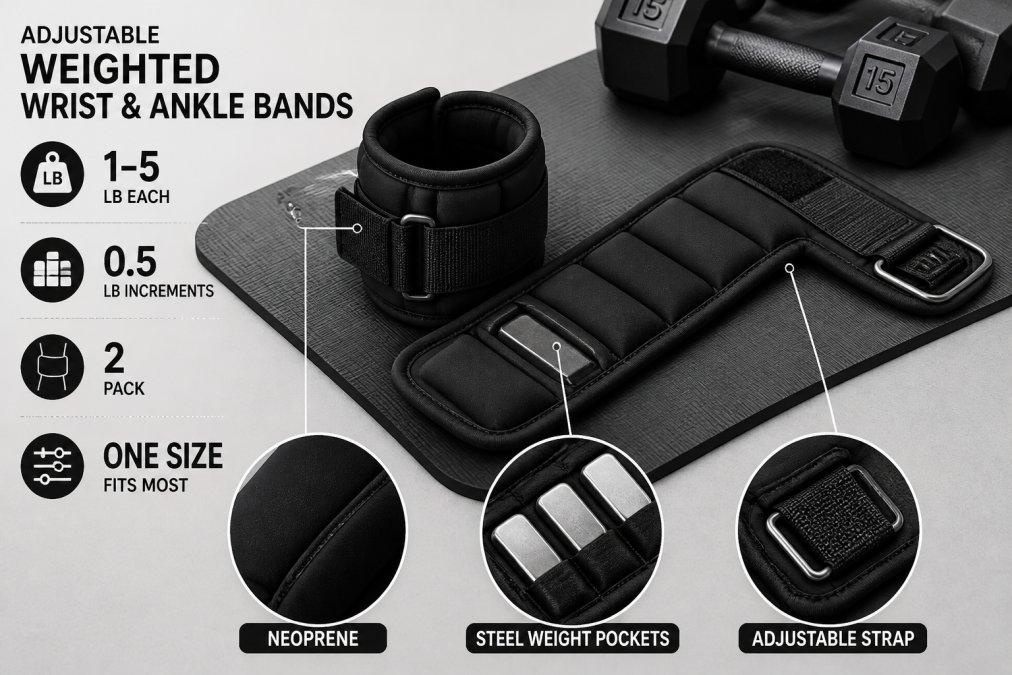
The Adjustable Weighted Fitness Wrist and Ankle Band from Health and Fitness Company ($91.03) uses neoprene and steel construction designed for durability. The adjustable design lets you scale resistance as your strength improves. Waterproof and sweatproof materials mean they perform consistently indoors or outdoors.

Weighted bands excel for isolation exercises and functional movements. Strap them on for lateral raises, leg lifts, or shadow boxing to increase training intensity. Many athletes use them during cardio workouts, adding resistance to running or walking to increase calorie expenditure and build lower-body endurance.
Unlike a vest that centralizes weight, bands distribute resistance along your limbs, forcing stabilizer muscles to engage more intensely. Your shoulders work harder during arm movements. Your hip stabilizers activate more during leg exercises.
Pros: Highly portable, adjustable resistance, targets specific limbs, low cost, durable construction.
Cons: Limited maximum weight, requires conscious placement to avoid slipping, less effective for heavy compound movements.
Adjustable Dumbbells and Barbell Sets
Adjustable dumbbells represent the foundation of effective home gym setup, replacing 5-10 traditional dumbbells while saving space and money.
Health and Fitness Company offers multiple options. The FIXTECH Adjustable Dumbbell Set ($227.74) functions as four tools in one: dumbbells, barbells, kettlebells, and push-up stands. The connector rod transforms paired dumbbells into a barbell within seconds. The 160lb Adjustable Dumbbells Set ($495.14) provides 16 weight levels from 5 to 80 pounds per dumbbell with quick-select mechanisms. The Adjustable Dumbbell 25/55 lb ($165.01) works well for space-constrained environments, adjusting from 11 to 55 pounds.
Adjustable dumbbells excel for hypertrophy and strength work. Progressive overload, gradually increasing resistance, drives muscle growth. Dumbbells force each arm to stabilize its own weight, recruiting more stabilizer muscles than machines.
Pros: Space-efficient, precise weight increments enable progressive overload, quick adjustment, suitable for all fitness levels, versatile.
Cons: Higher upfront cost, mechanisms require occasional maintenance, less durable than solid cast iron at extreme weights.
Kettlebells for Dynamic Functional Fitness
Kettlebells occupy a unique position in strength training. Their offset weight distribution and handle design create movement patterns impossible with dumbbells, building functional strength and explosive power.
The Cast Iron Kettlebell ($27.50 for 10 lbs) from Health and Fitness Company provides solid, durable construction lasting decades. Unlike dumbbells, kettlebells shift your center of gravity, forcing your entire body to stabilize during swings, cleans, and snatches.
Kettlebell training emphasizes explosive hip extension and core stability. A kettlebell swing engages your posterior chain, glutes, hamstrings, lower back, more intensely than most exercises. When you swing a kettlebell, momentum carries it through the movement. This creates a ballistic movement pattern that builds explosive strength and cardiovascular capacity simultaneously.
Pros: Builds explosive power, develops posterior chain strength effectively, compact and durable, excellent for conditioning, transfers to real-world movement patterns.
Cons: Requires technique to avoid injury, limited exercise variety compared to dumbbells, steep learning curve for beginners.
Weighted Hoop for Core and Cardio Training
The Smart Weighted Fit Hoop ($62.08) from Health and Fitness Company combines cardio training with core engagement. The 24 detachable knots add resistance while allowing you to adjust total weight by removing segments.
Weighted hoops target your waist and abdomen directly, building core stability through sustained contraction. Unlike exercises where core works as a stabilizer, hoop training makes your core the primary mover. Maintaining rotation elevates your heart rate and burns calories while your core muscles fatigue. Many athletes use weighted hoops as warm-up or finisher work.
Pros: Direct core engagement, dual cardio and strength benefit, adjustable resistance, highly portable, low-impact.
Cons: Requires practice to maintain consistent rotation, limited upper body application, not suitable for heavy strength work.
DIY Weighted Gear Solutions
Budget constraints don't require you to skip resistance training. DIY alternatives cost minimal money while delivering legitimate training stimulus.
Water jugs filled with sand or water create adjustable dumbbells. A gallon of water weighs approximately 8.3 pounds. Backpacks loaded with books or sand function as weighted vests. PVC pipe and concrete create DIY barbells and dumbbells. Resistance bands and chains add load to bodyweight exercises. Sandbags provide unstable load that challenges stabilizer muscles more than dumbbells.
Pros: Minimal cost, teaches resourcefulness, builds functional strength, accessible.
Cons: Requires construction or assembly, less precise weight increments, durability varies, less aesthetically appealing.
How to Choose a Weighted Vest Alternative
Selecting the right alternative depends on three factors: your training goal, your budget, and your available space.
Training goal determines tool selection. Isolation work benefits most from bands. Explosive power training favors kettlebells. Progressive strength building demands dumbbells or barbell systems. Core development benefits from weighted hoops or belts.
Budget shapes what's realistic. A quality adjustable dumbbell set ($165-$495) costs more upfront than weighted bands ($91) but provides more exercise variety. DIY solutions cost minimal money but demand time and construction skill. Kettlebells ($27 and up) offer exceptional value. Many athletes build their home gym gradually, starting with bands and dumbbells, then adding kettlebells as budget allows.

Space availability matters. Adjustable dumbbells and kettlebells require floor space. Weighted bands store in a gym bag. A weighted hoop needs clearance for rotation. Consider your long-term training plan and whether you'll progress to heavier loads.
| Equipment Type | Best For | Cost Range | Space Required | Durability |
|---|---|---|---|---|
| Weighted Bands | Isolation work, portability | $91-150 | Minimal | High |
| Adjustable Dumbbells | Strength building, home gym | $165-495 | Moderate | High |
| Kettlebells | Explosive power, conditioning | $27+ | Moderate | Very High |
| Weighted Hoop | Core training, cardio | $62 | Moderate | High |
| DIY Solutions | Budget training | $20-100 | Variable | Variable |
Safety Considerations for Weighted Training
Adding external resistance demands proper form and progressive loading.
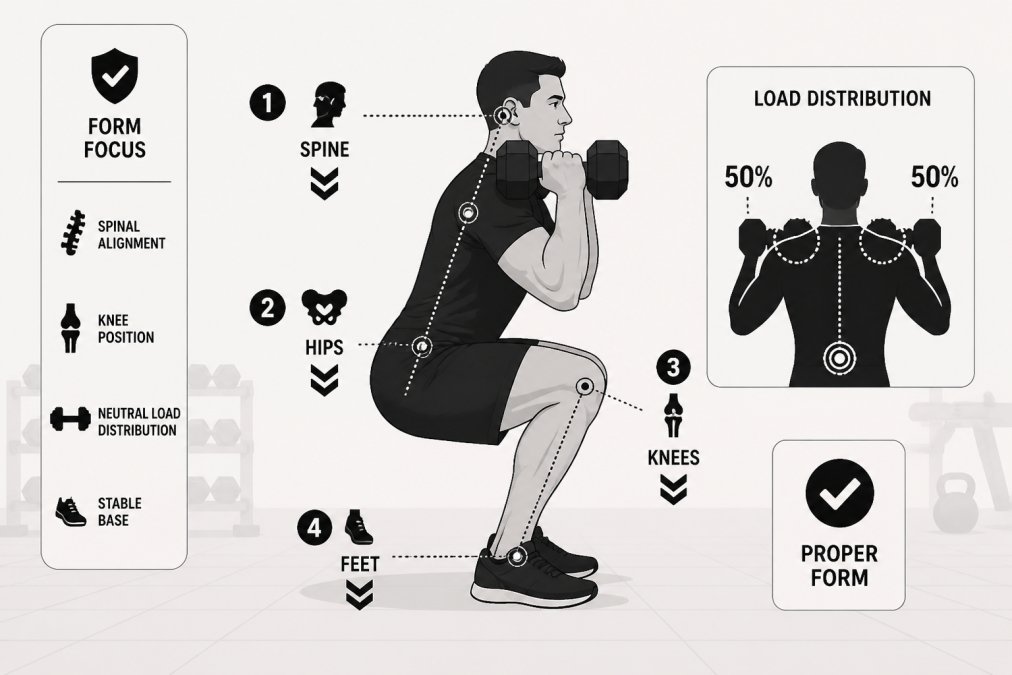
Progressive overload prevents injury. Start with resistance that allows 8-12 perfect repetitions. Once you complete all sets with excellent form, increase weight by 5-10%. Tendons and ligaments adapt slower than muscles. Rushing progression tears tissue and creates long-term problems.
Form quality matters more than weight. A perfect 20-pound dumbbell curl builds more strength than a sloppy 40-pound curl. Poor form redistributes load to joints instead of muscles, creating injury risk. When fatigue degrades your form, stop the set.
Warm up properly before loading. Five minutes of light cardio followed by bodyweight movements prepare your nervous system and joints for resistance. Warming up increases blood flow, activates stabilizer muscles, and alerts your nervous system to prepare for effort.
Core stability prevents spinal injury. During loaded exercises, engage your core before lifting. Brace your abdominal muscles as if preparing for a punch. This creates intra-abdominal pressure that stabilizes your spine.
Load distribution matters biomechanically. Uneven loading creates asymmetrical stress on your spine. Dumbbells force balanced loading. When using weighted vests or belts, ensure weight sits centered and secure.
Recovery prevents overuse injury. Training three to four days weekly with adequate recovery builds strength safely. Listen to pain signals. Soreness is normal. Sharp pain isn't. Stop immediately if you feel joint pain rather than muscle fatigue.
Building a Budget-Friendly Home Gym Setup
Starting a home gym doesn't require spending thousands. Strategic equipment selection delivers complete training capacity for under $500.
Phase 1: Foundation (weeks 1-4). Invest in adjustable weighted bands ($91 from Health and Fitness Company) and bodyweight training. Bands enable hundreds of exercises combined with push-ups, pull-ups, and bodyweight movements.
Phase 2: Strength Base (months 2-3). Add the FIXTECH Adjustable Dumbbell Set ($227.74), which provides dumbbells, barbell, kettlebell, and push-up stand functions. Combined with bands, you've built a functional strength training system.
Phase 3: Specialization (months 4+). Add kettlebells ($27+ for quality cast iron) or a weighted hoop ($62.08) based on your training goals. If you prioritize explosive power and conditioning, kettlebells serve you better. If core development matters most, a weighted hoop adds specialized capacity.

Total investment: approximately $380-500 for a complete home gym.
This setup handles strength training, conditioning, core work, and functional fitness. Quality matters more than quantity. One durable adjustable dumbbell set outperforms five cheap alternatives. Invest in reputable brands with solid construction.
Building your strength training program doesn't require expensive weighted vests or commercial gym memberships. The alternatives covered here deliver legitimate training stimulus at every budget level. Start with what you can afford, master the fundamentals, and progressively add equipment as your training evolves. Health and Fitness Company's Adjustable Weighted Fitness Wrist and Ankle Band ($91.03) and adjustable dumbbell systems ($165-$495) provide the durability and precision-engineered design serious athletes need to progress safely. Whether you're building your first home gym or optimizing an existing setup, matching equipment to your training goals accelerates results while keeping you injury-free.
Frequently Asked Questions
What is a good alternative to a weighted vest?
Adjustable weighted wrist and ankle bands, dumbbells, kettlebells, and weighted belts all serve as effective weighted gear alternatives. Wrist and ankle bands add resistance to bodyweight exercises and cardio, while dumbbells and kettlebells offer versatility for full-body strength training. The best choice depends on your workout style, available space, and fitness goals. Bands work well for beginners, while dumbbells suit those building a home gym with multiple exercise options.
Are weighted belts better than weighted vests for CrossFit?
Weighted belts and vests serve different purposes in CrossFit. Weighted vests distribute load across your torso, improving core stability during dynamic movements like running and jumping. Weighted belts concentrate resistance at your core for heavy lifts like squats and deadlifts, protecting your spine while building core strength. For CrossFit, many athletes use both: belts during heavy compound lifts and vests during metabolic conditioning. Your choice depends on which movements dominate your training.
What are the best budget-friendly alternatives to premium fitness gear?
Adjustable dumbbells like the FIXTECH set ($227.74) replace multiple single weights and save space. Neoprene dumbbell sets starting at $51.02 offer affordability with durability. Kettlebells at $27.50 each provide compound training without high cost. DIY alternatives include water-filled containers, sandbags, and resistance bands. Adjustable weighted wrist and ankle bands ($91.03) add resistance to bodyweight exercises without major investment. These options build functional strength while keeping your home gym budget manageable.
Can I use DIY weighted gear instead of commercial equipment?
DIY weighted gear can supplement commercial equipment, but quality matters for safety and durability. Homemade options like filled backpacks or water jugs work for temporary training, but they lack the ergonomic design, consistent weight distribution, and safety features of commercial gear. For serious strength training and injury prevention, commercial weighted alternatives like adjustable bands and dumbbells are more reliable. DIY solutions work best as temporary options or for light supplemental work, not as primary training tools.
How do I choose the right weight for my fitness level?
Start with weight that allows 8-12 controlled repetitions with good form. If you complete all reps easily, increase weight by 5-10 pounds. If you cannot finish the set with proper form, decrease weight. Beginners should start light, even 5-10 pound dumbbells build foundational strength. Adjustable equipment like the 11-55 lb adjustable dumbbell ($165.01) lets you scale weight as you progress without buying multiple sets. Progressive overload, gradually increasing resistance, drives strength gains safely.
This article was written using GrandRanker