Benefits of Wearing Ankle Weights While Walking

Table of Contents
- What Happens to Your Body When You Add Ankle Weights to Walking
- The Real Benefits: Muscle Toning, Strength Gains, and Bone Density
- Risks of Walking With Ankle Weights You Need to Know
- How to Use Adjustable Ankle Weights: A Step-by-Step Guide
- How Long to Wear Ankle Weights for Results
- Weight Recommendations by Fitness Level
- Recovery and Post-Walk Stretching for Joint Health
- Frequently Asked Questions
Last Updated: September 20, 2026
What Happens to Your Body When You Add Ankle Weights to Walking
Walking with added resistance at the ankles changes more than your calorie count. The benefits start with how your muscles, joints, and cardiovascular system respond to the extra load.
Ankle weights are adjustable straps worn around the lower legs that add resistance to walking, running, or bodyweight exercises. Your lower body muscles then work harder with every step, and your heart pumps more oxygen to keep up.
That extra demand is the point. At Health and Fitness Company, we design gear for this kind of progressive training, and our adjustable weighted wrist and ankle bands let you dial resistance up or down as your fitness improves.

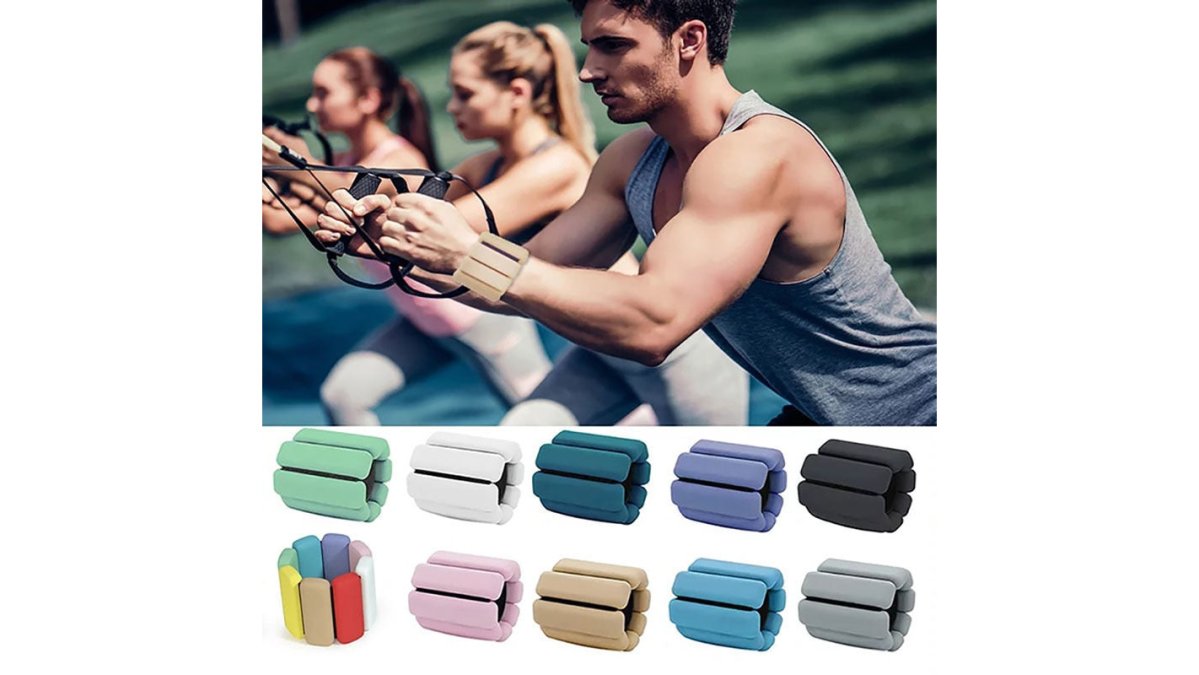
The immediate effects show up in your gait mechanics. Your hip flexors, quadriceps, hamstrings, and calves engage more forcefully to lift and plant the added weight, and that repeated demand builds muscular endurance and joint stability.
The Real Benefits: Muscle Toning, Strength Gains, and Bone Density
The clearest payoff is lower body toning: adding resistance to a daily movement turns a routine walk into a leg training session.
Here's what changes:
- Muscle toning: Extra load increases time under tension for your lower extremity muscles, especially the calves and glutes.
- Strength gains: Consistent resistance walking supports muscle hypertrophy when paired with adequate protein and recovery.
- Bone density: Impact loading from walking, amplified by added weight, gives your bones a stimulus that helps maintain density over time.
- Cardiovascular endurance: Your heart works harder to deliver oxygen, improving aerobic capacity.
The bone density benefit deserves emphasis. Weight-bearing activity is one of the few things that reliably encourages the body to maintain bone strength, and adding resistance increases that stimulus. According to the National Institute of Arthritis and Musculoskeletal and Skin Diseases, weight-bearing exercise is a key strategy for supporting bone health.
These benefits only materialize if you progress gradually. Too much weight too fast brings soreness and joint stress instead of gains.
Risks of Walking With Ankle Weights You Need to Know
The risks of walking with ankle weights are real. The added load sits far from your center of mass, increasing stress on your knees, hips, and lower back.
The most common problems:
- Joint stress: The extra weight amplifies impact loading through your knees and ankles with every step.
- Overuse injury: Tendonitis and connective tissue irritation develop when you increase load faster than your body adapts.
- Gait deviation: Too much weight can throw off your walking cadence and postural alignment, creating compensations that travel up the kinetic chain.
- Muscle fatigue: Tired muscles lose the proprioception that keeps your stride stable.
If you have existing knee, hip, or ankle conditions, or you're recovering from a lower extremity injury, talk to a physical therapist before adding load. Ankle weights are a training tool, not a universal one.
How to Use Adjustable Ankle Weights: A Step-by-Step Guide
Using adjustable ankle weights correctly protects your joints while you build strength. The adjustable design lets you match resistance to your current fitness level.
Step 1: Start light. Begin with the lowest setting on your adjustable weighted fitness wrist and ankle band and walk at your normal pace for 15 to 20 minutes.
Step 2: Check your fit. The band should sit snugly above the ankle without cutting off circulation or sliding during your stride.
Step 3: Walk with normal form. Keep your cadence steady. If your gait changes noticeably, the weight is too heavy.
Step 4: Progress gradually. Add resistance only after a full week at the current level with no joint discomfort.
Step 5: Cap your time. Keep weighted walks to 30 minutes or less at first, then extend slowly.
Expected result: Within a few weeks, you should notice your legs feeling stronger and your normal walks feeling easier.
How Long to Wear Ankle Weights for Results
How long to wear ankle weights for results comes down to consistency, not duration. Most people see meaningful changes in leg strength and endurance after four to six weeks of regular use.
Adjustable Weighted Fitness Wrist and →
A practical schedule:
| Experience Level | Session Length | Frequency | Weight Guidance |
|---|---|---|---|
| Beginner | 15-20 minutes | 3x per week | Lowest setting |
| Intermediate | 20-30 minutes | 4x per week | Moderate setting |
| Advanced | 30-45 minutes | 4-5x per week | Higher setting |
Longer isn't better. An hour with heavy ankle weights raises injury risk without proportional benefit; progressive overload works through gradual resistance increases, not marathon sessions.
Weight Recommendations by Fitness Level
Choosing the right weight matters more than any other variable. Instead of vague 'start light' advice, here's a framework built around body weight, training experience, and joint tolerance.
A useful rule of thumb: ankle weight load for walking should stay under roughly 1 to 2 percent of body weight per leg for beginners, and rarely exceed 3 to 5 percent per leg even for experienced users.
| Experience Level | Per-Ankle Load (150 lb adult) | Progression Signal | Time at Each Level |
|---|---|---|---|
| Beginner | 1-2 lb | Walk 20 min with no joint ache the next day | 2 weeks minimum |
| Intermediate | 2-4 lb | Current load feels easy for the full walk | 2-3 weeks |
| Advanced | 4-7 lb | Cadence stays within ~5% of unweighted pace | 3-4 weeks |
A few practical notes that most guides skip:
- Weigh your bands, don't trust the label. Adjustable bands often list a max load, not the actual weight at each setting. A kitchen scale gives you the real number.
- Match load to surface. Walking on pavement or a treadmill amplifies impact more than walking on grass or a track. Drop one level when you change to a harder surface.
- Split the load if you can. Distributing resistance between a weighted vest and ankle bands reduces the lever-arm stress on your knees while keeping total load similar.
- Reassess every 4-6 weeks. Joint tolerance changes with sleep, stress, and mileage. The load that felt fine last month may not be the right one today.
Recovery and Post-Walk Stretching for Joint Health
A short post-walk routine makes a measurable difference:
-
Calf stretch (gastrocnemius and soleus): 30 seconds per leg, twice, to release the muscles that absorb the most impact. Do both a straight-leg and bent-knee version to hit both calf muscles.
-
Hip flexor stretch: 30 seconds per side to counter the tightening that comes with added resistance.
-
Quad stretch: 30 seconds per leg to keep the front of your thigh from staying chronically tight.
-
Ankle circles: 10 in each direction to maintain mobility and proprioception.
-
Single-leg balance hold: 20-30 seconds per leg to retrain the stabilizer muscles that fatigue under load.
-
Elevate after long walks. Ten minutes with legs above heart level reduces swelling in the ankles and feet.
-
Hydrate and get protein within a couple hours. Connective tissue repair depends on both.
-
Rotate surfaces. Alternating pavement, track, and grass changes the impact pattern and spreads stress across tissues.
-
Sleep is the recovery tool. Most tissue repair happens during deep sleep, so a hard weighted walk on a short-sleep night is a poor trade.
Frequently Asked Questions
Do ankle weights help lose belly fat?
Ankle weights can increase caloric expenditure during walking by adding resistance, which may support overall fat loss when combined with a calorie deficit. However, spot reduction is a myth: you cannot target belly fat specifically. A 2022 study in the Journal of Sports Science and Medicine found that walking with 2-pound ankle weights increased heart rate by about 10% and calorie burn by roughly 15% compared to unweighted walking. For belly fat loss, pair weighted walks with full-body strength training and a balanced diet.
Do ankle weights help tone your legs?
Yes, ankle weights add resistance to your lower body muscles, particularly the quadriceps, hamstrings, glutes, and hip flexors. This extra load increases muscle activation during walking, which can improve muscle tone over time. According to a 2021 review in Sports Medicine, using 1-3 pound ankle weights during walking for 30 minutes, three times per week, led to measurable strength gains in the lower extremity after eight weeks. For best toning results, combine weighted walks with progressive resistance training.
Is there a downside to wearing ankle weights?
The main downside is added stress on your joints and altered gait mechanics. Wearing ankle weights can change your walking cadence and increase impact loading on your knees, hips, and lower back. Overuse injuries like tendonitis and muscle strains are possible if you start too heavy or walk too long. A 2020 study in Gait & Posture found that ankle weights over 3 pounds caused significant gait deviations in healthy adults. Start light, limit sessions to 20-30 minutes, and stop if you feel joint pain.
How long should you wear ankle weights?
For beginners, start with 10-15 minutes per session, two to three times per week. Gradually increase to 30 minutes as your strength improves. The American Council on Exercise recommends limiting weighted walking sessions to 30-45 minutes to avoid excessive joint stress. If you are using 1-2 pound weights, you can extend to 45 minutes. For heavier weights (3-5 pounds), keep sessions under 30 minutes. Always monitor for joint discomfort and adjust duration based on your fitness level.