How to Choose Durable Weighted Ankle Bands in 2026

Table of Contents
- What You'll Need Before You Shop
- How to Choose Durable Weighted Ankle Bands: Core Criteria
- Adjustable Ankle Weights vs Fixed Weight: Which Lasts Longer?
- Comfort, Fit, and Weight Distribution
- Benefits of Using Ankle Weights for Cardio
- How to Clean Weighted Ankle Bands Without Damaging Them
- Common Mistakes That Shorten Ankle Band Lifespan
- Frequently Asked Questions
Last Updated: September 16, 2026
What You'll Need Before You Shop
Durable weighted ankle bands are wearable resistance tools that attach around the lower leg to add load during walking, running, or bodyweight training, and choosing a pair that lasts starts with knowing your measurements before you ever add one to a cart.

This guide from Health and Fitness Company walks through the material specs, closure systems, and fit details that separate bands still going strong after two years from ones that fray in six weeks. Grab a soft measuring tape and note two numbers: the circumference of your ankle at its narrowest point, and the circumference just above the ankle bone where the strap will actually sit. Those two measurements decide everything that follows.
A common mistake is buying by color or price and only checking fit after the band arrives. By then, you're stuck with a strap that either cuts into your Achilles tendon or slides down mid-jog.
How to Choose Durable Weighted Ankle Bands: Core Criteria
Choosing durable weighted ankle bands comes down to four things: fabric quality, closure hardware, weight adjustability, and how the load sits against your leg. Get those right and the band will outlast several cheap replacements.
Material and Fabric Durability
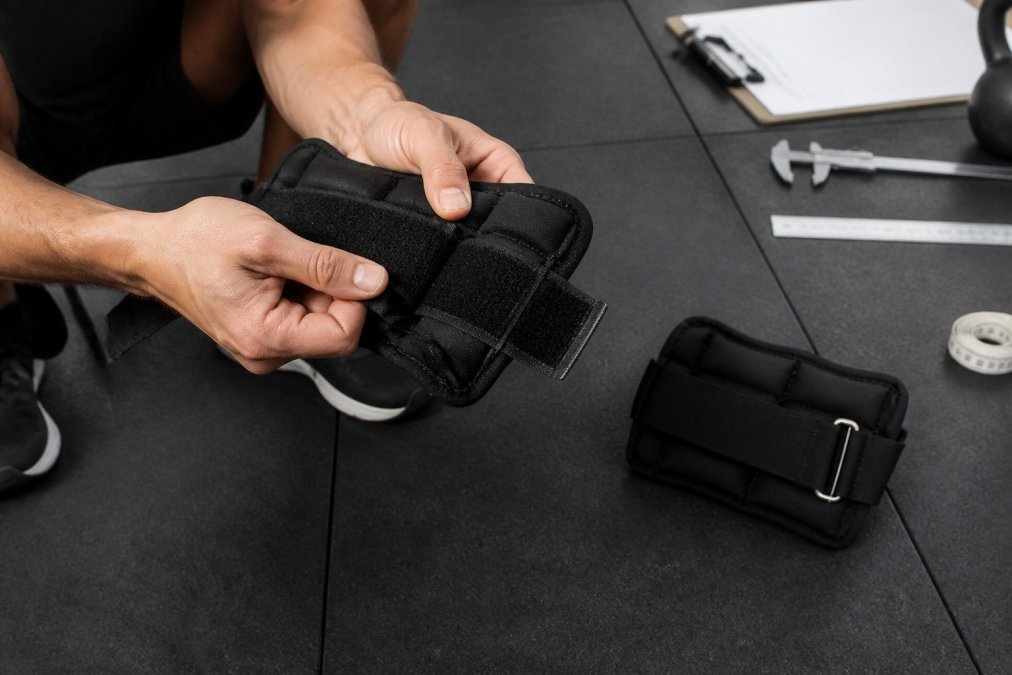
Look for neoprene padding over a reinforced outer shell, with double-stitched or bar-tacked seams at every stress point. Seam integrity is the first thing to fail on budget bands, usually where the strap meets the weight pouch. Sand-filled pouches hold their shape longer than loosely packed alternatives, and moisture-wicking lining keeps sweat from degrading the fabric from the inside. Flip the band inside out in the store or check the product photos for visible stitching density; if you can't see the seams, assume they're minimal.
Secure Closure Systems: Hook-and-Loop vs. Buckles
Hook-and-loop closure dominates the category for good reason: it's adjustable in small increments and easy to tighten mid-set. The trade-off is lint buildup, which slowly kills grip. Buckles hold tension more consistently over years but limit you to preset holes, so fit is less precise. For most training, hook-and-loop wins on adjustability; buckles win on long-term strap tension retention if you never need micro-adjustments.
Adjustable Ankle Weights vs Fixed Weight: Which Lasts Longer?
Adjustable ankle weights generally outlast fixed-weight pairs because you can replace or redistribute weight inserts instead of retiring the whole band when one pouch wears out. Fixed bands are simpler and often cheaper, but a single failed seam means the entire unit is done. Adjustable designs also let you progress from lighter loads to heavier ones without buying a second set, which fits progressive overload far better than jumping between fixed sizes. The one drawback: more components means more places for stitching to fail, so inspect the insert pockets specifically. If you want a single pair that grows with your training, adjustable is the better investment.
Comfort, Fit, and Weight Distribution
Comfort determines whether you actually wear the bands, and weight distribution determines whether they help or hurt. A well-designed band spreads load across a wide, padded surface rather than concentrating it on one spot, which reduces chafing and skin irritation on longer sessions. Ergonomic contouring around the ankle bone matters more than most buyers expect, because a flat strap pressing on that bony ridge becomes painful within minutes. Check that the padding density feels firm but not rigid; overly soft padding compresses flat and lets the weight shift.
Benefits of Using Ankle Weights for Cardio
Adding ankle weights to cardio raises the demand on your lower body without changing the movement pattern, which is why they show up in lower body toning routines and physical therapy programs alike. Wearable resistance increases calorie expenditure during walking and jogging and adds load to hip flexors, quads, and glutes with every step. The catch is that the extra load changes your gait, so start lighter than you think you need and build gradually. Anyone with existing knee or hip issues should check with a clinician before adding load to a walking or running routine.
How to Clean Weighted Ankle Bands Without Damaging Them
Cleaning weighted ankle bands correctly means hand-washing in cool water with a mild detergent, then air-drying flat away from direct heat. Never machine-wash or tumble-dry sand-filled or iron-pellet bands; agitation ruptures the inner pouches and heat degrades the hook-and-loop closure. For quick refreshes between washes, wipe the neoprene with a damp cloth and let it dry fully before storing. Store bands loosely coiled, not folded tight, so the padding doesn't develop permanent creases.
| Task | Method | Frequency |
|---|---|---|
| Quick wipe-down | Damp cloth, air dry | After every session |
| Deep clean | Hand wash, cool water, mild detergent | Every 2-3 weeks |
| Closure maintenance | Remove lint from hook-and-loop | Weekly |
| Storage | Loose coil, dry location | After every use |
Common Mistakes That Shorten Ankle Band Lifespan
The most common mistake is overtightening the strap to stop slippage, which stresses the seams and flattens the padding. A band that fits correctly shouldn't need to be cranked down. Machine-washing is the second killer, and it's fatal for filled pouches. Storing bands folded or compressed is a slower version of the same problem. Finally, ignoring small tears in the outer fabric lets moisture reach the filling, which accelerates breakdown from the inside out.
Frequently Asked Questions
What features make weighted ankle bands more durable?
The most durable weighted ankle bands use reinforced stitching at every stress point, neoprene padding that resists compression over time, and a hook-and-loop closure rated for thousands of open-close cycles. Look for sand-filled or iron-pellet compartments that are double-sealed so filler cannot migrate or leak. Moisture-wicking outer fabric also prevents the sweat buildup that breaks down adhesives and stitching. Checking seam integrity before purchase is the fastest way to spot bands that will fail early.
Are adjustable ankle weights better than fixed-weight options?
Adjustable ankle weights let you change resistance as your training progresses, which means one pair can serve beginner and advanced sessions alike. Fixed-weight bands are simpler and often cheaper, but you outgrow them or need multiple pairs. For progressive overload, adjustable models with removable weight inserts give more long-term value. The tradeoff is that more moving parts mean more potential failure points, so closure quality and insert security matter more on adjustable designs.
How do I prevent ankle weights from sliding during exercise?
A secure fit starts with correct sizing. Measure your ankle circumference and match it to the band's stated range rather than guessing. Strap tension should be firm enough that the band does not rotate during lunges or leg lifts, but loose enough that you can slide one finger underneath. Non-slip inner linings and wide straps distribute pressure better than narrow ones. If a band still slides, it is usually too large or the closure has lost its grip.
How often should I clean weighted ankle bands?
Wipe them down after every session and do a deeper clean once a week if you train daily. Sweat and skin oils break down neoprene and weaken hook-and-loop closures over time. Most fabric bands can be hand-washed in cool water with mild soap, then air-dried completely before storage. Never machine-wash or tumble-dry weighted bands, since heat and agitation can damage stitching, shift the filler, and warp the closure system.
Building a durable weighted ankle band habit is less about finding the perfect pair and more about choosing gear that survives your training schedule. At Health and Fitness Company, we build adjustable weighted wrist and ankle bands with precision-engineered construction, waterproof and sweatproof materials, and a customizable design that adapts as your strength grows. Get started with Health and Fitness Company and train with equipment made to keep up.