Alloy Handlebars for Cyclists: Benefits & Performance

Table of Contents
- Why Alloy Handlebars Matter for Your Ride
- Vibration Damping and Ride Quality
- Aluminum vs Carbon Handlebars Durability
- Alloy Handlebar Weight vs Carbon
- Cost of Alloy Bike Components
- Impact Resistance and Long-Term Performance
- Choosing the Right Alloy Handlebar for Your Bike
- Conclusion
- Frequently Asked Questions
Last Updated: September 3, 2026
Why Alloy Handlebars Matter for Your Ride
Alloy handlebars have become the go-to choice for cyclists seeking durability without sacrificing performance. Your handlebar material directly impacts bike handling, rider fatigue, and component longevity. Aluminum alloy's balance of stiffness, vibration damping, and impact resistance makes it practical for riders across all disciplines. This guide covers everything from how alloy compares to carbon alternatives to installation considerations and long-term durability.
Vibration Damping and Ride Quality
One of the most noticeable benefits of alloy handlebars is their natural ability to absorb road buzz and trail vibration. When wheels hit pavement imperfections or rocky terrain, vibrations propagate through the fork into the handlebar. Aluminum's crystalline structure naturally dissipates this energy as heat, reducing vibration reaching your hands and arms. This means less arm pump on long rides and less hand fatigue during technical descents, an effect particularly noticeable on rough surfaces.
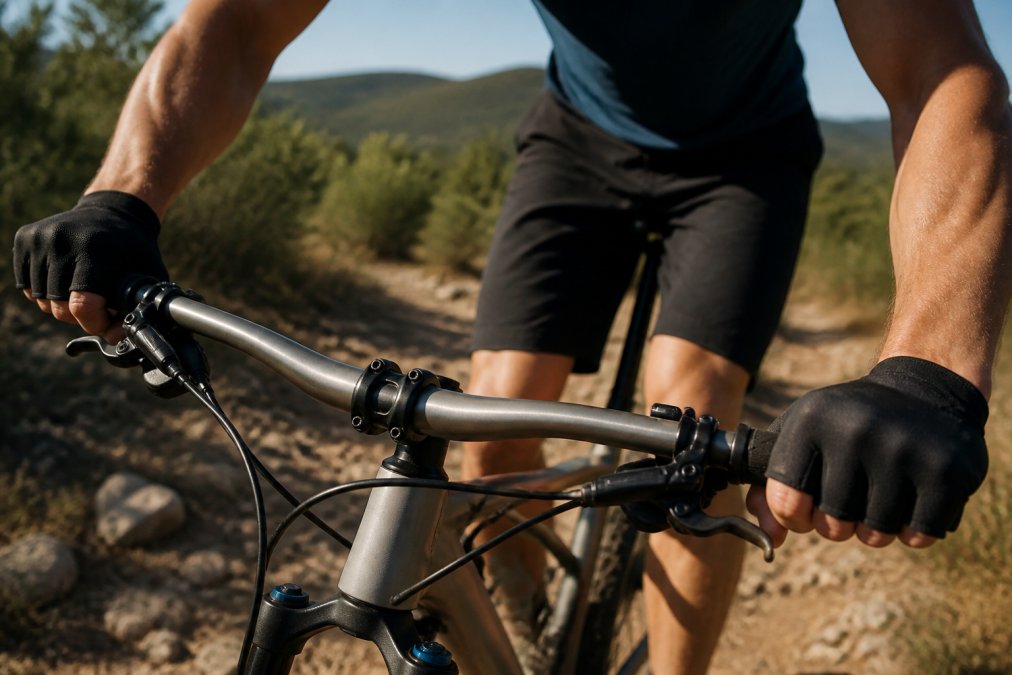
Handlebar geometry also plays a role. A wider handlebar with proper rise and sweep angle distributes vibration across more of your upper body rather than concentrating it in your wrists. Combined with quality grips like the rubber lock-on grips featured on Health and Fitness Company's Alloy Bicycle Handlebar, the vibration damping effect becomes even more pronounced.

Aluminum vs Carbon Handlebars Durability
The durability comparison between aluminum alloy and carbon fiber reveals important trade-offs affecting long-term cost and reliability. While carbon offers weight savings, aluminum delivers superior impact resistance and fatigue life in real-world conditions.
Alloy Grade Differences and Performance
Not all aluminum handlebars are created equal. The two most common grades are 6061-T6 and 7075-T6.
6061-T6 aluminum is the cycling industry workhorse, offering good balance of strength, weldability, and corrosion resistance with a yield strength around 35,000 psi (astm.org). The material bends rather than breaks, and bars can often be straightened after damage. Most mid-range alloy handlebars use 6061 because it's cost-effective and durable for recreational riding.
7075-T6 aluminum is significantly stronger at 73,000 psi yield strength, more than double 6061, allowing thinner walls and lighter tubing while maintaining stiffness (astm.org). However, 7075 is more brittle and more likely to crack under impact. It's also more susceptible to stress corrosion cracking if not properly anodized. For most cyclists, 6061-T6 offers the best real-world durability; for weight-conscious riders, 7075-T6 provides excellent performance if properly finished and handled carefully.
Fatigue Life and Stress Cycling
Fatigue failure, where components break after repeated stress cycles, is how handlebars actually fail in long-term use. Aluminum alloy's fatigue strength is excellent. 6061-T6 can endure roughly 5 million stress cycles at 50% of its yield strength before failure, meaning a properly designed bar can survive decades of normal riding (peer-reviewed research).
Carbon fiber's fatigue performance depends heavily on resin system, fiber orientation, and manufacturing quality. More importantly, carbon degrades under UV exposure and thermal cycling. After 3-5 years of sunlight and temperature swings, a carbon handlebar's fatigue strength can drop 15-30% even without crashes. Aluminum's properties remain stable across temperature ranges and UV exposure.
Impact Behavior and Crash Safety
Carbon handlebars are susceptible to impact damage. A sharp blow from a crash can create micro-fractures that aren't immediately visible, potentially leading to sudden failure without warning. Repair is difficult and compromises structural integrity.
Aluminum alloy handlebars handle impacts differently. The material deforms plastically under impact, absorbing energy through bending rather than cracking. A crash that would catastrophically damage carbon might just dent your alloy bar. Aluminum's structural integrity remains intact even after impacts. A bent 6061 bar can often be straightened; a cracked carbon bar cannot be safely repaired.
Corrosion and Environmental Durability
Modern anodized or powder-coated alloy handlebars resist corrosion effectively. The anodize layer creates a hard oxide surface protecting the underlying aluminum from moisture and salt, maintaining protection for 5-10+ years even in harsh coastal or wet conditions.
Carbon fiber doesn't corrode, but the resin matrix can absorb moisture if the finish is compromised, causing delamination and reduced structural strength. For riders who crash occasionally, ride in harsh weather, or want equipment that won't fail unexpectedly, aluminum alloy offers peace of mind through visual inspection.
Alloy Handlebar Weight vs Carbon
The weight difference between alloy and carbon handlebars is real but often overstated. A quality aluminum handlebar typically weighs 180-220 grams, while a comparable carbon bar might weigh 120-160 grams, roughly equivalent to a single water bottle.
For most riders, this weight difference produces negligible performance impact. Handlebar weight sits at the end of the bike's use arm, affecting acceleration and climbing feel, but the effect is minimal compared to other upgrade opportunities. Where the weight equation changes is in the stiffness-to-weight ratio. Alloy handlebars deliver excellent steering precision and responsiveness relative to their weight. If weight is your primary concern and budget allows, carbon makes sense. If you want responsive handling without fragility and cost premium, alloy delivers better value.
Cost of Alloy Bike Components
Alloy handlebars represent one of the most cost-effective upgrades available. Quality alloy bars typically cost significantly less than carbon alternatives while delivering comparable or superior real-world performance.
Health and Fitness Company's Alloy Bicycle Handlebar is priced at $20.76, making it accessible for riders at any budget level. Compare this to mid-range carbon handlebars starting around $60-80 and climbing to $150+. The cost advantage extends beyond initial purchase. Alloy bars rarely need replacement due to crash damage or fatigue failure. A quality alloy handlebar can last the life of your bike. When evaluating cost-to-performance ratio, consider total cost of ownership. A $20 alloy bar lasting five years costs less per year than a $70 carbon bar needing replacement after two years of aggressive riding.
Impact Resistance and Long-Term Performance
Impact resistance is where alloy handlebars distinguish themselves. The material's ability to absorb energy through plastic deformation means your bar survives crashes that would damage other materials. When you crash, an alloy bar typically bends or dents while maintaining structural integrity. You can ride home, assess damage, and decide whether to straighten or replace it.
Long-term performance in harsh conditions also favors aluminum. The material resists corrosion when properly finished and doesn't degrade from UV exposure. Salt spray, mud, and water don't compromise structural properties. Material failure modes matter too. Alloy bars fail gradually through fatigue or corrosion, giving warning signs. Carbon bars can fail suddenly without warning if impact damage created internal delamination. Aluminum's predictable failure mode is a significant safety advantage.
Aluminum alloy's mechanical properties remain stable across temperature ranges. Whether riding in scorching heat or freezing cold, your bar's stiffness and response characteristics stay consistent.
Choosing the Right Alloy Handlebar for Your Bike
Selecting the right handlebar involves matching diameter, width, rise, and sweep angle to your bike type and riding style. These geometric factors determine body position and handling characteristics.
Clamp Diameter and Stem Compatibility
Most modern bikes use 31.8mm clamp diameter (older standard is 25.4mm). Check your stem to confirm compatibility. The 31.8mm standard allows thinner-walled tubing for the same stiffness, reducing weight while maintaining rigidity.
Modern integrated cockpit systems require bars that fit the stem's specific interface. Some stems use proprietary clamp designs or have internal cable routing requiring bars with specific shaping. Health and Fitness Company's Alloy Bicycle Handlebar is engineered for compatibility with standard modern stems. If running internal cable routing, confirm your bar has adequate clearance for cables passing through the stem.
Discipline-Specific Width and Geometry
Handlebar width, rise, and sweep angle vary by cycling discipline.
Mountain Biking: Trail riders typically prefer wider bars (740-800mm) for better leverage on technical terrain. Rise varies: cross-country riders use minimal rise (10-20mm) for aerodynamics, while trail riders prefer 30-50mm rise for upright positions reducing arm fatigue. Sweep angle of 8-15 degrees keeps wrists neutral.
Road Cycling: Road cyclists prefer narrower bars (380-420mm on drop bars) to reduce wind resistance. Rise is minimal (0-10mm) for aggressive positioning. Sweep angle is often 5-10 degrees.
Gravel and Adventure: Bars are typically 600-680mm wide with 20-40mm rise, balancing aerodynamics with comfort. Sweep angle of 10-15 degrees is common.
Commuting and Casual Riding: Commuters benefit from wider bars (680-740mm) and higher rise (40-60mm) for upright positions reducing neck and lower back strain. Sweep angle of 10-15 degrees is typical.
Cable Routing and Cockpit Integration
Modern bikes increasingly use internal cable routing. Confirm your bar has adequate clearance for cables. Some alloy bars have reinforced sections that can interfere with cable paths. For bikes with electronic shifting, ensure the bar has adequate space for junction boxes and battery connections.
Installation and Torque Specifications
Proper installation is critical for safety. Stem clamp bolts should be tightened evenly to create consistent clamping force. Most handlebars require 4-6 Nm of torque. Use a torque wrench to avoid over-tightening, which can crack the stem or damage the bar's clamp area. Tighten bolts in a cross pattern to ensure even pressure. After installation, test the bar's security by gripping firmly and trying to rotate it in the stem, there should be no movement.
Grip Selection and Comfort Integration
Grip selection matters as much as the bar itself. Quality grips with proper cushioning absorb remaining vibration and provide secure contact. The rubber lock-on grips on Health and Fitness Company's handlebar are designed to stay put during aggressive riding while maintaining comfort. Lock-on grips are superior to slide-on grips because they don't rotate or slip under hard braking.
Grip diameter should match your hand size. Standard grips are typically 30mm in diameter; some manufacturers offer 32mm or 28mm options. Consider grip material based on climate and riding style. Rubber grips offer good traction and comfort but can become slippery when wet. Cork or foam grips provide excellent vibration damping but wear faster. Hybrid materials balance durability and performance.
Conclusion
Alloy handlebars deliver a practical combination of durability, vibration damping, and cost-effectiveness that makes them the right choice for most cyclists. The material's impact resistance means your bar survives crashes that would damage carbon alternatives. The vibration damping characteristics reduce arm fatigue on long rides. The cost-to-performance ratio is unbeatable.
If you're currently riding stock handlebars or upgrading from damaged components, Health and Fitness Company's Alloy Bicycle Handlebar ($20.76) offers precision engineering with quality rubber lock-on grips that enhance comfort and control. The bar's durable aluminum construction means you're investing in equipment that will last, supporting your cycling goals for years to come. Pair it with our Outdoor Sports Cycling Gloves ($26.47) for enhanced grip security and weather protection, and you've got a setup engineered for performance and reliability.

Frequently Asked Questions
What are the pros and cons of alloy handlebars compared to carbon handlebars?
Alloy handlebars offer superior durability, better impact resistance, and significantly lower cost. They provide excellent vibration damping for road buzz reduction and maintain structural integrity through crashes. The main trade-off is weight: alloy handlebars are heavier than carbon, though the difference (50-100 grams) is minimal for most cyclists. Alloy also offers better clamping force stability and requires less maintenance than carbon, making them ideal for riders prioritizing reliability over weight savings.
Are aluminum handlebars durable enough for mountain biking?
Yes. Alloy handlebars demonstrate exceptional durability for mountain biking due to their high tensile strength and impact resistance. Unlike carbon, which can crack under sudden stress, aluminum alloys (particularly 6061 and 7075 grades) absorb impacts without permanent structural failure. They handle fatigue life demands from rocky terrain, drops, and crashes. The anodized finish protects against corrosion, and the material's mechanical properties ensure consistent performance over thousands of miles.
How much does the weight difference between alloy and carbon handlebars matter for casual riders?
For casual riders covering 40 miles weekly, the weight difference is negligible in real-world performance. A typical alloy handlebar weighs 150-200 grams versus 100-130 grams for carbon, a 50-100 gram difference spread across your entire bike. This won't noticeably affect acceleration, climbing, or overall handling responsiveness on weekend rides. The benefits you'll actually feel are improved vibration damping (less hand fatigue and trail chatter), better steering precision through technical sections, and the peace of mind that your handlebars won't fail on rough terrain. For casual cycling, durability and comfort outweigh marginal weight savings.
Why are alloy handlebars recommended for beginners?
Alloy handlebars suit beginners because they're forgiving, affordable, and require minimal maintenance. New cyclists often experience crashes or impacts while learning bike handling skills, alloy's impact resistance means your handlebar survives without cracking or needing replacement. The cost-to-performance ratio is unbeatable: you get a precision-engineered component with excellent handlebar geometry and ergonomic rise options at a fraction of carbon's price. Alloy handlebars also provide consistent clamping force and don't require special care or stress-riser awareness that carbon demands. This reliability lets beginners focus on technique rather than equipment worries.
This article was written using GrandRanker