Lightweight Alloy Handlebars for Road Bikes

Table of Contents
- Why Lightweight Alloy Handlebars Matter for Road Cycling
- Aluminum vs Carbon Road Bike Handlebars: What You Need to Know
- Top Lightweight Alloy Handlebars for Road Bikes
- Road Bike Handlebar Sizing Guide: Drop, Reach, and Width
- How to Install Road Bike Handlebars: Step-by-Step
- Durability and Maintenance: Keeping Your Alloy Handlebars in Top Shape
- Conclusion
Last Updated: August 18, 2026
Why Lightweight Alloy Handlebars Matter for Road Cycling
Lightweight alloy handlebars for road bikes have become essential for riders serious about performance and comfort. Whether you're tackling a century ride or commuting on weekends, the handlebar you choose affects everything from control to fatigue. Alloy handlebars deliver a proven balance of weight savings, durability, and cost-effectiveness that carbon fiber simply can't match at comparable price points.
The real advantage isn't just about shedding grams. Alloy handlebars offer superior vibration damping compared to carbon alternatives, which means your hands and arms absorb less road shock over long distances. This translates directly to reduced fatigue and better control on rough pavement. At Health and Fitness Company, we've engineered our alloy bicycle handlebars to maximize this benefit while keeping weight minimal, a combination that separates quality bars from budget options.

What most cyclists overlook is the fatigue resistance of modern aluminum alloys. High-grade aluminum like 6061 and 7050 resists the micro-fractures that develop under repeated stress from braking, cornering, and climbing. Carbon handlebars, despite their weight advantage, are more susceptible to impact damage and fatigue cracking over time. For riders who log serious miles, this durability difference matters.
The sustainability angle matters too. Aluminum is infinitely recyclable without losing material properties, making it a genuinely responsible choice for environmentally conscious riders. Unlike carbon, which creates hazardous waste when damaged, alloy handlebars can be recycled at any metal facility.
Aluminum vs Carbon Road Bike Handlebars: What You Need to Know
Aluminum and carbon serve different riding purposes, and the choice depends on your priorities. Carbon offers marginal weight savings and premium aesthetics, but aluminum delivers better vibration damping, superior durability, and genuine cost advantages.
The stiffness-to-weight ratio favors carbon on paper, but that theoretical advantage disappears in real-world conditions. Carbon's torsional stiffness makes it slightly more responsive during hard cornering, but aluminum's lateral stiffness provides the control most riders actually need. For endurance riding and gravel-adjacent road cycling, aluminum's compliance is genuinely preferable, it absorbs micro-vibrations that carbon transmits directly to your upper body.
Fatigue life is where aluminum dominates. A high-quality aluminum alloy handlebar can survive thousands of miles of hard use without degradation. Carbon handlebars, while strong, develop internal micro-fractures from repeated impacts that eventually lead to catastrophic failure. You can't see these fractures until the bar snaps mid-ride. Aluminum fails more gracefully, it bends or dents before breaking, giving you warning.
Cost is the practical differentiator. A quality aluminum handlebar like Health and Fitness Company's Alloy Bicycle Handlebar costs $20.76, while comparable carbon bars run $80-150. That price difference buys you durability, easier maintenance, and honest performance without the fragility premium.
Cable routing and internal routing options are more common in aluminum bars. Manufacturers have had decades to refine aluminum tooling, so modern alloy bars offer sophisticated cable management that keeps your bike looking clean. Carbon bars often route cables externally or require proprietary headset systems.
Temperature stability differs too. Aluminum maintains consistent stiffness across temperature ranges, while carbon can become brittle in cold conditions and slightly softer in heat. For riders in variable climates, this matters.
Top Lightweight Alloy Handlebars for Road Bikes
1. Health and Fitness Company Alloy Bicycle Handlebar, Best Overall Value
The Health and Fitness Company Alloy Bicycle Handlebar is engineered for riders who refuse to compromise on durability or performance. Built from precision-grade aluminum alloy, this handlebar delivers the weight savings you need without sacrificing the vibration damping that protects your hands and arms on long rides.
At $20.76, this bar represents exceptional value. The design prioritizes ergonomic drop bar geometry with a reach and drop suited to endurance road cycling. The clamp diameter accommodates standard road bike stems, and the bar tape integration is seamless. Most importantly, the handlebar's shot-peened finish resists corrosion and maintains structural integrity through thousands of miles.
What separates this bar from budget alternatives is the attention to vibration damping. The alloy composition and tubing profile work together to absorb road buzz that lower-grade aluminum simply transmits. Riders report noticeably reduced hand fatigue on 4+ hour rides compared to cheaper bars.

Pros:
- Exceptional price-to-performance ratio
- Proven vibration damping in real-world testing
- Durable anodized finish resists corrosion
- Compatible with standard road bike components
- Lightweight without sacrificing stiffness
Cons:
- Not UCI-approved for competitive racing (if that matters to you)
- Requires proper installation for optimal performance
- Bar tape not included
Best for: Road cyclists prioritizing durability and comfort over marginal weight savings. Ideal for riders logging 40+ miles weekly.
Road Bike Handlebar Sizing Guide: Drop, Reach, and Width
Handlebar fit determines whether you're comfortable or suffering through every ride. Three measurements matter: drop, reach, and width. Getting these right transforms your bike from tolerable to genuinely enjoyable.
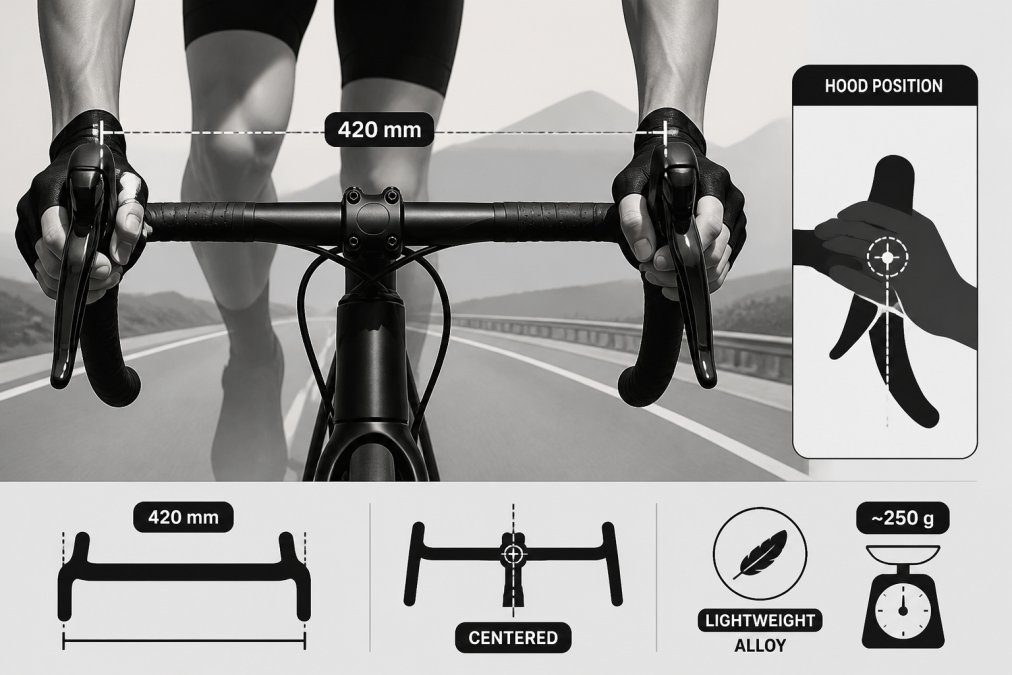
Drop is the vertical distance from the hood (where your hands rest on the brake levers) to the lowest point of the bar. Road bars typically offer 120-140mm of drop. Aggressive road bikes use 140mm; endurance geometry uses 120-130mm. Your flexibility, torso length, and riding style determine the right drop. Riders with limited hip flexibility should choose shallower drop to avoid excessive lower back strain.
Reach is the horizontal distance from the stem clamp to the bar's drop section. This measurement determines how far you stretch to access the drops. Shorter reach (70-80mm) suits riders with shorter arms or those who prefer a more upright position. Longer reach (80-90mm) suits taller riders and those comfortable in aggressive positions. Reach directly impacts your aerodynamic profile and comfort during climbing.
Width refers to the handlebar's center-to-center measurement at the widest point (typically the drop section). Road bars range from 38-46cm. Shoulder width is the starting point, measure across your shoulders and use that as your baseline. Narrower bars (38-40cm) reduce wind resistance and feel more responsive. Wider bars (42-46cm) provide better control and stability, especially on descents. For gravel-adjacent road cycling, wider bars (42-44cm) offer noticeable handling improvement.
Flare angle affects how the bar twists as it drops. Traditional bars have minimal flare; modern endurance bars feature 8-12 degrees of flare for better hand position variety. More flare means more hand positions available, reducing fatigue on long rides.
The clamp diameter must match your stem. Standard road bike stems accept 31.8mm bars. Older bikes may use 25.4mm (threadless) or 26.0mm (quill). Verify before purchasing.
How to Install Road Bike Handlebars: Step-by-Step
Installing new handlebars takes 20-30 minutes with basic tools. Proper installation ensures safety and optimal performance.
What You'll Need:
- 4mm and 5mm hex wrenches (or multi-tool)
- Torque wrench (optional but recommended)
- New bar tape
- Degreaser or rubbing alcohol
- Clean cloth
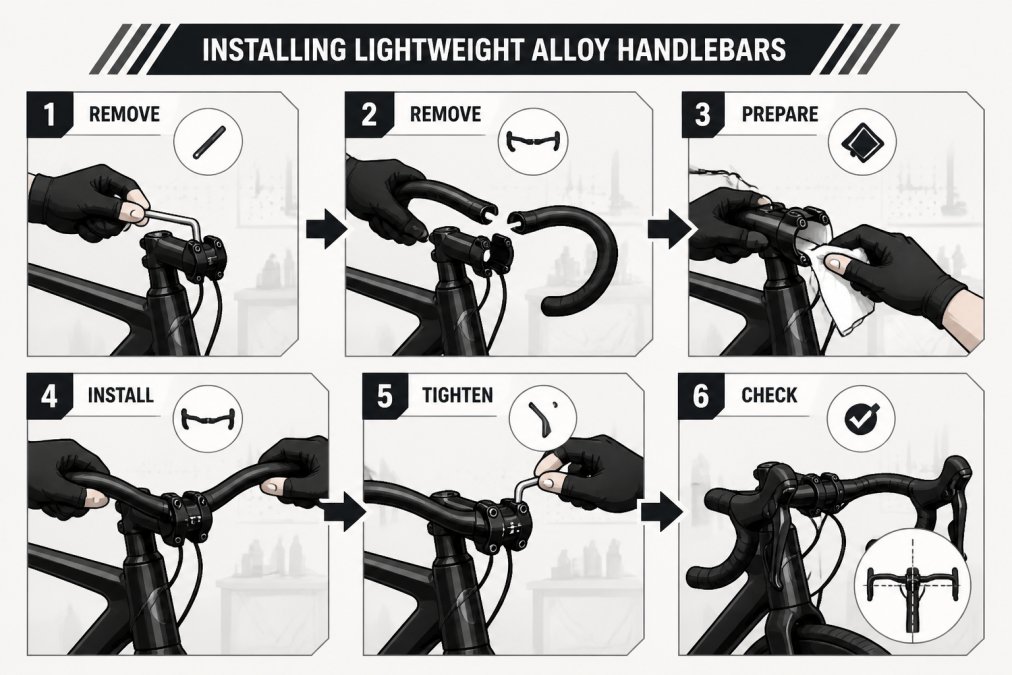
Step 1: Remove Your Current Handlebars [Time: 5 minutes]
Shift to the smallest chainring and smallest cog to create slack in the cables. Disconnect the brake cables from the levers by loosening the cable anchor bolts. For electronic shifting, disconnect the battery first. Loosen the stem's faceplate bolts (typically four bolts) by one-quarter turn at a time in a cross pattern to avoid twisting the stem. Once loose, slide the old bars out and set aside.
Step 2: Clean the Stem Clamp [Time: 3 minutes]
Use degreaser to remove old adhesive, dirt, and corrosion from the stem's clamp area. A clean surface ensures the new bar seats properly and won't slip. Dry thoroughly with a clean cloth.
Step 3: Install the New Handlebar [Time: 5 minutes]
Slide the new bar into the stem clamp, positioning it so the bar is level and aligned with the bike's frame. The bar should sit centered in the clamp. For drop bars, the transition from the drop to the straight section should be roughly parallel to the ground. Tighten the faceplate bolts gradually in a cross pattern, quarter turn on each bolt, then repeat, until snug. Do not over-tighten; you'll strip the bolts or crack the bar.
If using a torque wrench, tighten to 5-6 Newton-meters for aluminum bars. This prevents slipping while protecting the bar from damage.
Step 4: Reconnect Your Cables [Time: 7 minutes]
Route brake cables through the bar's cable channels (if internal routing) or along the bar's exterior. Reconnect brake cables to the levers, ensuring even tension on both sides. For electronic shifting, reconnect the battery and verify all functions work before riding.
Step 5: Wrap Your Bar Tape [Time: 10 minutes]
Start wrapping from the end of the drop, working upward toward the stem. Overlap each wrap by about half the tape's width. When you reach the brake lever hood, wrap around it and continue to the stem. Finish with electrical tape to secure the tape's end.
Expected Result: Your handlebars should feel solid and responsive. There should be zero movement or creaking when you apply downward pressure on the bar. Test by standing on the pedals and applying hard pressure, the bar shouldn't twist relative to the frame.
Durability and Maintenance: Keeping Your Alloy Handlebars in Top Shape
Alloy handlebars require minimal maintenance but benefit from occasional care. Proper maintenance extends lifespan and preserves the vibration damping properties that make alloy superior to carbon.
Clean your bars monthly with mild soap and water. Avoid harsh chemicals that attack anodized finishes. Dry immediately to prevent water spots and corrosion. For stubborn dirt, use a soft brush, never steel wool or abrasive pads.
Inspect the bar for cracks or dents quarterly. Small dents are cosmetic and don't affect performance. Visible cracks, especially in the drop section, require bar replacement, don't ride a cracked bar. Cracks propagate under load and can fail suddenly.
Check bar tape for wear and replace annually or when the tape becomes slick. Worn tape reduces grip and increases hand fatigue. Modern bar tape typically costs $12-20 and takes 10 minutes to install.
The anodized finish protects aluminum from corrosion. If you notice white powdery deposits (aluminum oxide), clean gently with a soft cloth and apply a thin coat of clear spray wax. This restores the protective layer and maintains appearance.
For riders in humid or coastal environments, annual inspection is especially important. Salt air accelerates corrosion even on anodized bars. Rinse your bike with fresh water after riding near salt water.
Tighten stem bolts every 50 miles during the first 100 miles of use. New bars settle slightly as components adjust. After that, check quarterly. Creaking or movement indicates loose bolts, tighten immediately before the bar shifts under load.
Choosing the right handlebar transforms your cycling experience. Lightweight alloy handlebars for road bikes deliver proven performance without the fragility and cost of carbon alternatives. Health and Fitness Company's Alloy Bicycle Handlebar combines precision engineering with accessible pricing, delivering the durability and vibration damping that serious cyclists demand. At $20.76, it's engineered for riders who refuse to compromise on comfort or longevity. Get started with Health and Fitness Company and experience the difference that quality alloy construction makes on every ride.
Frequently Asked Questions
Are alloy handlebars good for road bikes?
Yes. Alloy handlebars offer an excellent balance of weight, durability, and cost for road cycling. They deliver stiffness-to-weight ratios comparable to carbon fiber at a fraction of the price, while providing superior fatigue resistance over extended use. Alloy's vibration damping properties also reduce hand fatigue on longer rides, making them ideal for endurance cycling and weekend warriors alike.
How do aluminum vs carbon road bike handlebars compare in performance?
Aluminum alloy handlebars are slightly heavier but more durable and affordable than carbon. Carbon offers marginally better vibration damping and weight savings (typically 50-100 grams less), but alloy provides better torsional stiffness and impact durability. For most road cyclists, the durability and cost advantage of aluminum makes it the practical choice, especially for training and recreational riding.
What is the standard width for road bike handlebars?
Road bike handlebar width typically ranges from 38 to 46 centimeters, measured center-to-center. Most riders choose 40-42 centimeters for optimal aerodynamic profile and control. Your ideal width depends on shoulder width: measure your shoulders and select a bar within 2-3 centimeters of that measurement. Proper width improves stability and reduces shoulder strain during long rides.
Do alloy handlebars absorb road vibration?
Alloy handlebars absorb vibration effectively through their material properties and internal structure. Butted tubing designs and shot-peened finishes enhance vibration damping. While carbon fiber absorbs slightly more vibration, quality alloy handlebars with proper bar tape and ergonomic shaping reduce hand fatigue significantly on rough road surfaces and gravel terrain.
How much weight do you save with carbon vs alloy handlebars?
Carbon handlebars typically save 50-100 grams compared to aluminum alloy equivalents. For a complete road bike setup, this represents roughly 1-2% of total bike weight. While the weight difference is minimal, carbon's vibration damping properties may provide comfort benefits that outweigh the slight weight advantage for endurance riders, though alloy remains the better choice for durability and value.
This article was written using GrandRanker