How to Clean and Maintain Ankle Weights: A 2026 Guide

Table of Contents
- Why Regular Cleaning and Maintenance of Ankle Weights Matters
- Daily Care: Quick Wipe-Downs After Every Workout
- How to Deep Clean Fabric and Neoprene Ankle Weights
- How to Deodorize Workout Gear and Remove Stubborn Odors
- How to Prevent Rust on Adjustable Ankle Weights
- How to Store Ankle Weights Properly for Longevity
- Velcro Restoration and Hardware Maintenance
- When to Replace Your Ankle Weights
- Frequently Asked Questions
Last Updated: September 29, 2026
Why Regular Cleaning and Maintenance of Ankle Weights Matters
To clean and maintain ankle weights, you remove sweat, bacteria, and grime from fabric, neoprene, and closures after each use, then store the gear dry. Skip it and you get rusted hardware, stretched closures, and skin irritation long before the weights wear out.
Here is the short version of what matters:
- Sweat is the enemy. It carries salt, and salt eats metal hardware and breaks down fabric coatings.
- Moisture buildup feeds bacterial growth. That is where the smell comes from.
- Closures wear out first. Velcro loses grip when lint and fibers clog the hooks.
- Heat ruins neoprene. Hot water and hot dryers warp it.
Daily Care: Quick Wipe-Downs After Every Workout
Wipe the surface immediately after you take the weights off. Sweat left on fabric for hours sets into the fibers and starts to smell.
Here is the daily routine:
- Wipe the outer fabric with a damp cloth
- Wipe the inner lining where it touched your skin
- Wipe the metal hardware and any exposed stitching
- Check the closures for hair, lint, and carpet fibers
- Air dry completely before storage
How to Deep Clean Fabric and Neoprene Ankle Weights
To clean and maintain ankle weights deeply, hand-wash them in cool water with mild detergent, then air dry away from heat. Do this every two to four weeks, or weekly if you sweat heavily.
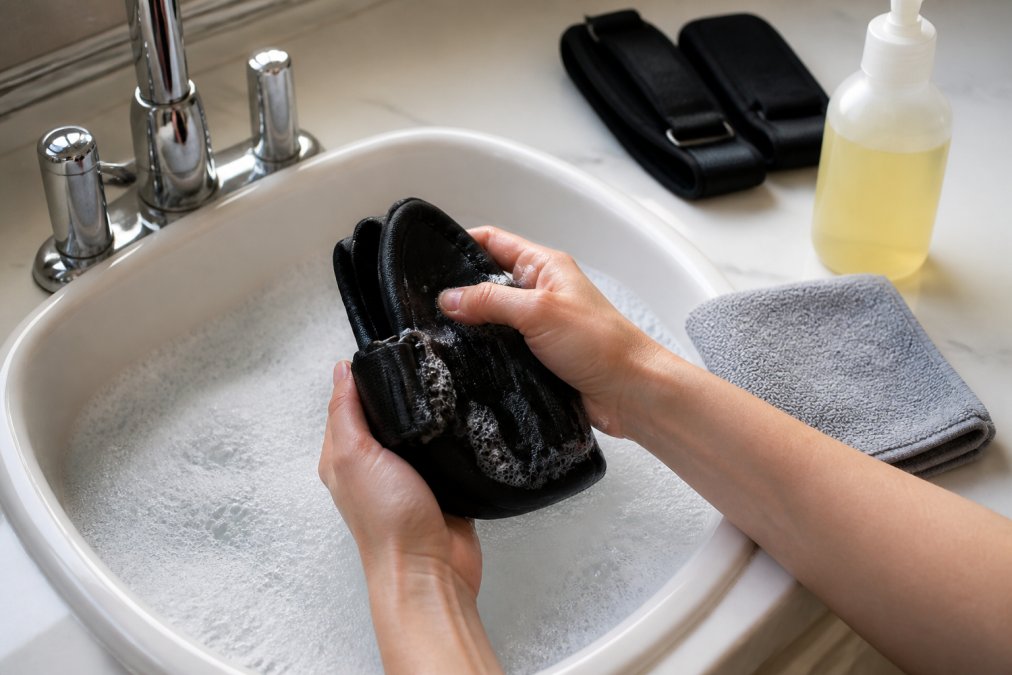
Hand-Washing Step by Step
- Fill a sink with cool water. Lukewarm is fine; hot is not.
- Add a teaspoon of mild detergent. Skip bleach and abrasives.
- Soak 10 to 15 minutes to loosen dried sweat and salt.
- Work soapy water through the fabric by hand. Gently squeeze neoprene; do not scrub or wring.
- Rinse under cool water until no suds remain. Leftover soap attracts dirt.
- Press out excess water with a towel. Never twist.
- Air dry flat or hanging, away from sun and heat. Expect 12 to 24 hours.
Machine Washing Safety Guide
Most fabric and neoprene ankle weights survive a washing machine only under strict conditions. Check the tag first; if there is no tag and the weights contain loose sand or metal shot, hand-wash only.
If you machine wash:
- Use a mesh laundry bag to protect the closures
- Choose the gentle or delicate cycle
- Use cold water only
- Add a small amount of mild detergent, no bleach
- Skip the dryer completely. Air dry is the only safe option
How to Deodorize Workout Gear and Remove Stubborn Odors
Deodorizing ankle weights is a two-part job: kill the odor-causing bacteria, then remove the residue they fed on. Masking sprays fail because the bacteria stay in the fabric and the odor returns within a day.
Step 1: Strip the residue first
Before any deodorizing soak, hand-wash the weights in cool water with a teaspoon of mild detergent. This removes the dried sweat salts and skin oils that hold bacteria.
Step 2: Choose the right neutralizer for the problem
Match the fix to the symptom:
- Sour, mildewy smell (damp storage). White vinegar soak. Mix one part white vinegar with four parts cool water, submerge for 15 minutes, then rinse until the water runs clear. The acetic acid suppresses the bacteria behind that damp-closet smell, and the vinegar scent fades as the gear dries.
- Sharp, ammonia-like smell (heavy sweat). Baking soda soak. Dissolve half a cup of baking soda in a basin of cool water, soak for 30 minutes, then rinse. Baking soda neutralizes sweat's acidic compounds rather than covering them.
- Lingering smell after two washes. Alternate the two treatments across separate wash cycles. Do not combine them in one soak, vinegar and baking soda neutralize each other on contact, so you get fizz and no cleaning benefit.
Step 3: Dwell times by material
Soak times are not universal. Neoprene is a closed-cell foam, so it absorbs very little water and only needs 10 to 15 minutes in either solution. Woven fabric straps can handle the full 30 minutes for baking soda and 15 minutes for vinegar. Sand-filled weights should never be submerged, wipe the exterior with a cloth dampened in the vinegar solution instead, because water that reaches the sand filler will not dry out and will turn the interior into a mildew farm.
Step 4: Dry in a way that does not undo the work
Air dry flat or hanging in a room with moving air. An hour of indirect sunlight adds a mild UV assist, but do not leave neoprene in direct sun long, UV degrades the foam. A box fan cuts drying time roughly in half, and bacteria recolonize fastest while fabric is damp.
Step 5: Keep it from coming back
The biggest cause of recurring odor is storing weights before they are fully dry. Run a hand over the inner lining and strap seams, if either feels cool or clammy, it is not dry. A monthly vinegar wipe-down on the interior lining keeps the bacterial load low enough that odor never gets established.
How to Prevent Rust on Adjustable Ankle Weights
Rust prevention on adjustable ankle weights comes down to one rule: dry the metal completely, every time. Buckles, D-rings, and slide bars corrode first.
Adjustable Weighted Fitness Wrist and →
Corrosion prevention steps that actually work:
- Dry hardware with a towel, not air. Air drying leaves moisture in the crevices around rivets and buckles.
- Check the strap pockets. If your weights have removable metal bars or shot bags, pull them out and dry them separately.
- Store with a moisture absorber. A small silica gel packet in the storage bin keeps humidity down.
- Never store damp gear in a sealed bag. That traps moisture and speeds up rust.
How to Store Ankle Weights Properly for Longevity
Storage is where most ankle weights quietly fail. Moisture, heat, and pressure work on the materials daily, and the right setup depends on the filler, because sand-filled and iron-shot weights have different vulnerabilities.
Match storage to the filler material
- Sand-filled weights. Sand is hygroscopic, pulling moisture from the air. Once damp, it stays damp and the strap develops mildew from the inside out. Store in a breathable cotton or mesh bag, never a sealed plastic bin, and add a silica gel packet. Check it monthly, when the beads stop being free-flowing, replace or recharge it.
- Iron-shot or metal-bar weights. The filler will not absorb water, but the metal rusts if moisture sits against it. The bigger risk is condensation: moving a cold bag from a car trunk into a warm room forms droplets on the metal shot. Let weights reach room temperature before enclosed storage.
- Neoprene-coated weights. Neoprene traps heat and moisture against whatever it covers. Store these flat or hanging with the neoprene surface exposed to air, not folded against itself, so the foam can dry through.
The storage setup that works
- Hang them. A wall hook or strap loop keeps the shape, lets air circulate on both sides, and prevents closures from pressing into the fabric. Best for neoprene and sand-filled weights.
- Lay them flat if you cannot hang. Stack no more than two high, and do not put anything heavier on top. Long-term compression flattens the foam and can force the filler into lumps.
- Fasten the closures before storing. This keeps the hook side from snagging other gear and picking up lint, which is the leading cause of weak Velcro grip.
- Keep them out of hot spaces. Garages, cars, and attics routinely reach temperatures that soften neoprene and degrade the adhesives holding seams together. A closet shelf at room temperature is the safer default.
- Avoid direct sun for long periods. UV breaks down synthetic fabrics and elastic over time. An hour of indirect sun for drying is fine; weeks on a sunny windowsill is not.
Moisture control in the storage area
A small silica gel packet in the bin or bag keeps ambient humidity down, especially in basements and garages. Do not rely on a sealed plastic container alone, if any moisture is on the weights, it traps it against the gear. If you use a sealed bin, add a moisture absorber and open the lid weekly.
A quick monthly storage check
Once a month, check three things: the inner lining for dampness or smell, the metal hardware for early rust spots, and the closures for lint packed into the hooks. Catching these early takes a minute; catching them late means replacing the gear.
Velcro Restoration and Hardware Maintenance
Velcro loses grip because the hook side fills with lint, hair, and fabric fibers. The fix is ungluing that debris, not replacing the strap.
Here is how to restore a weak closure:
- Pick out the debris. Use a pair of tweezers or a fine-tooth comb to pull lint and hair from the hook side.
- Brush the hooks. A stiff-bristle brush or an old toothbrush loosens packed fibers.
- Wash both sides. A mild detergent hand-wash clears the oils that make hooks slick.
- Let it dry fully. Velcro does not grip well when damp.
- Test the hold. Press the closure together and pull. If it still slips, the hooks are worn out.
When to Replace Your Ankle Weights
Replace ankle weights when closures no longer hold, the filler has shifted into lumps, the strap cracks or tears, or the hardware is pitted with rust, signs the gear can no longer hold weight safely.
A few specific signals to watch for:
- Closure failure. If the strap pops open during a set, stop using it.
- Lumpy filler. Uneven weight distribution strains your joints and throws off your form.
- Cracked or stiff neoprene. Once the material hardens, it will tear.
- Rust that returns. If corrosion comes back after cleaning, the metal is compromised.
| Problem | Likely Cause | Fix | Replace If |
|---|---|---|---|
| Odor that returns fast | Bacteria in fabric | Hand-wash, vinegar soak, air dry | Smell survives two washes |
| Weak closure grip | Lint in hooks | Comb out debris, wash, dry | Still slips after cleaning |
| Rust on buckles | Trapped moisture | Dry by hand, seal with polish | Rust returns after cleaning |
| Lumpy, uneven weight | Shifted filler | Reshape by hand | Filler will not redistribute |
| Cracked neoprene | Heat damage | None | Cracks are visible |
Frequently Asked Questions
Can ankle weights be washed in a washing machine?
Most ankle weights should not go in a washing machine, especially those with metal inserts or Velcro closures. The agitation can damage the fastening mechanism, cause rust, and break down fabric integrity. Hand-washing with mild detergent and warm water is safer. If the manufacturer explicitly states machine washable, use a mesh bag on a gentle cycle with cold water, then air dry completely. Never put them in the dryer.
How do you get the smell out of ankle weights?
To deodorize workout gear like ankle weights, start by hand-washing with a mild detergent and warm water. For stubborn odors, soak them in a solution of one part white vinegar to four parts water for 30 minutes, then rinse thoroughly. Sprinkle baking soda inside fabric pockets and let sit overnight before vacuuming or brushing off. Always air dry in a well-ventilated area, preferably outdoors in direct sunlight, which helps kill odor-causing bacteria.
Is it safe to submerge adjustable ankle weights in water?
It depends on the material. Neoprene or fabric weights with sealed metal inserts can usually be submerged briefly for hand-washing, but prolonged soaking can lead to rust and moisture buildup inside. Adjustable weights with exposed metal bars or sand-filled pouches should not be submerged. Always check the manufacturer's instructions. For quick cleaning, use a damp cloth with mild soap instead of full immersion to protect the internal materials.
How often should you clean your home gym equipment?
Wipe down ankle weights after every workout with a damp cloth to remove sweat and bacteria. Deep clean them every two to four weeks, depending on how often you use them and how much you sweat. If you notice odors or visible dirt, clean immediately. For shared equipment, sanitize after each use. A consistent maintenance schedule prevents bacterial growth, mildew, and material breakdown, extending the life of your gear.
Worn-out gear is not just a nuisance. It changes how the weight sits on your ankle, and that changes your form. Health and Fitness Company builds adjustable weighted wrist and ankle bands with a waterproof, sweatproof silicone and steel design, so daily wipe-downs and hand-washing actually keep them in shape. If you are ready to train with gear built to last, get started with Health and Fitness Company and add resistance that holds up to your routine.