Weighted Vest Alternatives for Resistance Training

Table of Contents
- Why Athletes Choose Weighted Vest Alternatives
- Resistance Bands: Versatile Load Distribution for Progressive Overload
- Weighted Belt vs Weighted Vest: Which Suits Your Training Style
- Sandbag Training Benefits and Load Distribution Mechanics
- Weighted Vest Safety and Best Practices for Long-Term Joint Health
- Budget-Friendly and DIY Modifications for Weighted Training
- Choosing Your Weighted Vest Alternative: A Decision Framework
- Conclusion
Last Updated: August 16, 2026
Why Athletes Choose Weighted Vest Alternatives
Weighted vests have dominated resistance training for years, but they're far from the only way to add load to your workouts. The truth is, many athletes abandon them after a few months because they restrict breathing, limit range of motion, or simply feel uncomfortable during dynamic movements. A weighted vest concentrates load directly on your torso, which can compress your spine during jumping or running. This is where weighted vest alternatives become genuinely useful.
The real advantage of exploring weighted vest alternatives lies in biomechanics and training flexibility. Different load distribution methods activate your muscles differently, engage your stabilizer muscles at different intensities, and allow you to progress resistance training without the constraints of a fixed vest. Whether you're building functional training capacity, improving cardiovascular endurance, or developing muscular hypertrophy, the right alternative can outperform a traditional vest for your specific goal.
This guide breaks down the most effective weighted vest alternatives, explains the biomechanics behind each approach, and gives you a decision framework to choose what fits your goals.
Resistance Bands: Versatile Load Distribution for Progressive Overload
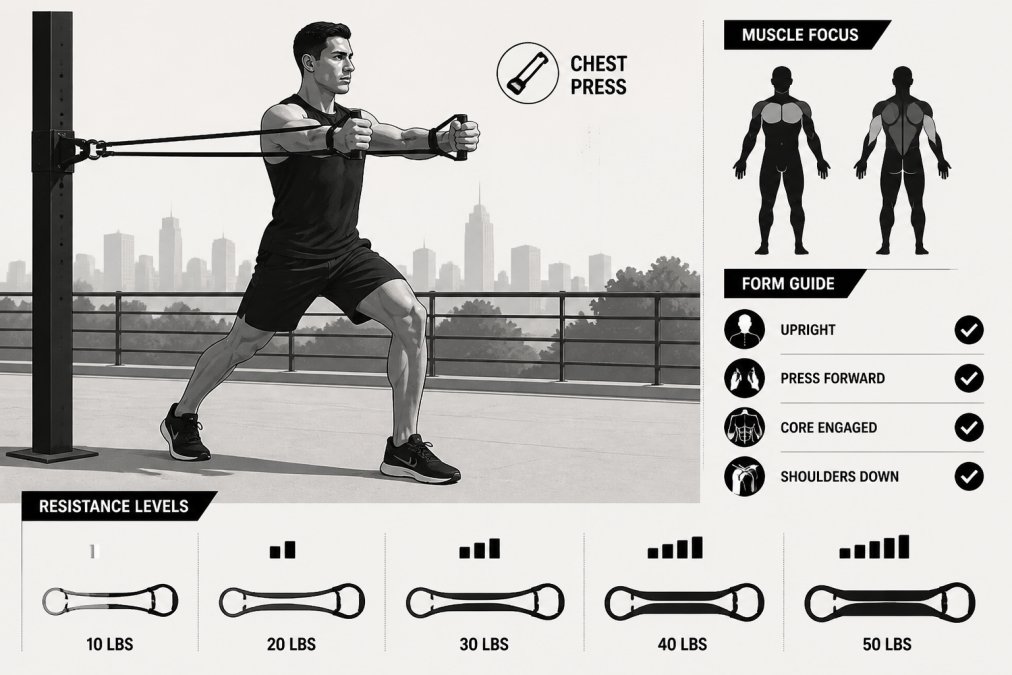
Resistance bands deliver progressive overload without the joint compression that weighted vests create. They distribute resistance throughout your entire range of motion, which means your muscles work harder at the top of the movement where they're strongest. This is fundamentally different from gravity-based loading, where resistance decreases at the top of a lift.
The mechanics matter here. When you use a resistance band for exercises like chest presses or squats, the band tension increases as you extend. Your muscles face maximum load exactly where they can handle it best. This creates what's called accommodating resistance, and it builds strength differently than dumbbells or vests. For bodyweight exercises like pull-ups or dips, bands reduce the effective weight at the bottom of the movement (where you're weakest) and increase load as you press upward (where you're strongest).

Resistance bands also excel at preventing injury during the early stages of strength training. A beginner athlete can start with minimal resistance and make tiny incremental weight adjustments by changing band thickness or anchor point. Health and Fitness Company offers the Fitness Resistance Elastic Band at $198.95, which includes five resistance levels (10lbs to 40lbs) and a training pole. This setup lets you progress smoothly without jumping between weights.

The practical advantage shows up fast. Resistance bands pack into a gym bag, travel without issue, and work in any space. They're also forgiving on joints because they provide constant tension without impact. For functional training and calisthenics, bands create instability that forces your stabilizer muscles to work harder. This builds the kind of core stability that weighted vests can't match because vests lock your torso in place.
Weighted Belt vs Weighted Vest: Which Suits Your Training Style
The weighted belt vs weighted vest comparison reveals a critical difference in load distribution and movement freedom. A weighted belt concentrates weight at your hips and lower back, which keeps your center of gravity lower and more stable during exercises. A weighted vest spreads load across your entire torso, which increases spinal compression during dynamic movements.
For athletes focused on lower body strength, a weighted belt wins. Exercises like squats, deadlifts, and lunges feel more natural with hip-based loading because the weight stays close to your body's center of gravity. Your core doesn't have to fight the load as much. Weighted belts also allow full shoulder and arm movement, which matters for exercises where your upper body needs freedom.
Weighted vests shine for upper body work and cardiovascular conditioning. The distributed load challenges your core stability and forces your postural muscles to work harder. If you're training for functional fitness or high-intensity interval training, a vest creates more total muscle activation because your entire body resists the load.
The trade-off is breathing and range of motion. Weighted vests compress your chest and abdomen, which restricts your breathing during intense work. Weighted belts don't have this problem. If you're doing explosive movements like sprints, box jumps, or Olympic lifts, a belt allows unrestricted breathing and full hip extension.
For most athletes, the weighted belt vs weighted vest choice comes down to your primary goal. Lower body strength and power athletes should test a weighted belt first. Upper body and conditioning athletes should start with a vest. Many serious athletes use both, rotating based on the training phase.
Sandbag Training Benefits and Load Distribution Mechanics
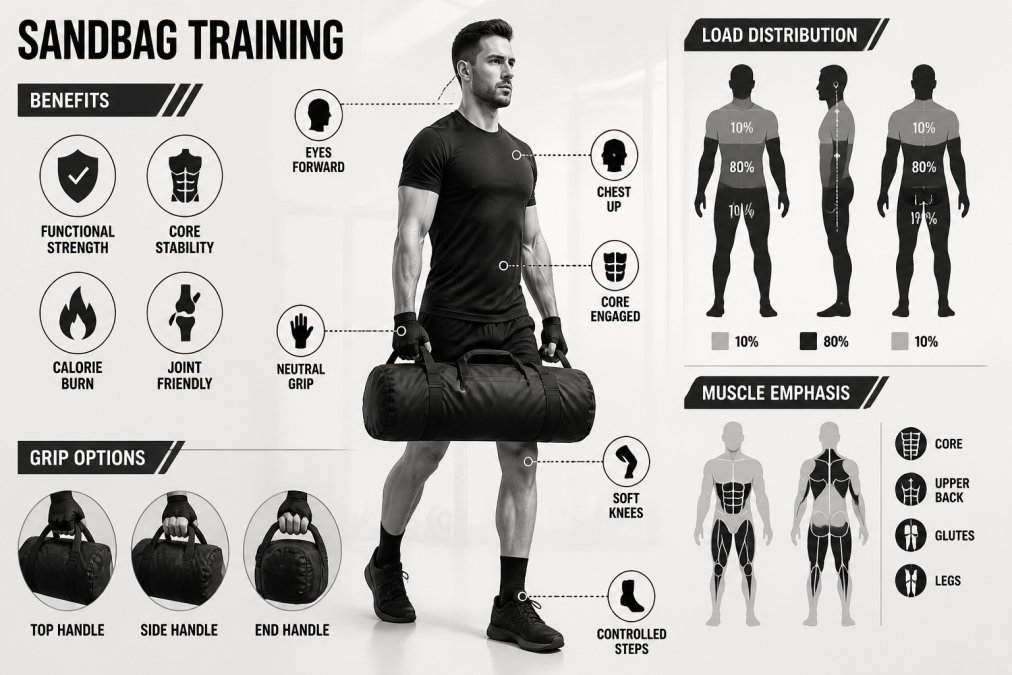
Sandbags represent a completely different approach to load distribution. Unlike a vest or belt that holds weight in a fixed position, a sandbag's weight shifts and moves. This instability forces your muscles to work harder and engages stabilizer muscles that fixed-weight tools don't target as effectively.
The biomechanics of sandbag training create what's called dynamic load distribution. The sand inside the bag doesn't stay still, it shifts as you move, which means your muscles must constantly adjust to maintain control. This builds functional strength and improves your ability to handle unstable loads in real-world situations. For athletes training for sports or practical strength, sandbags deliver better carryover than static weighted vests.
Sandbag carries, throws, and presses also build grip strength and forearm endurance that weighted vests don't address. The uneven weight distribution forces your core and back muscles to work asymmetrically, which improves balance and coordination. Research from the Journal of Strength and Conditioning Research shows that unstable loading creates greater muscle activation than stable loading in many movements.
The practical limitation is that sandbags are heavy, awkward to store, and require more space than resistance bands or wrist weights. They're also harder on your joints during high-impact movements because the shifting weight creates unpredictable forces. For steady-state exercises like carries or loaded walks, sandbags excel. For explosive or ballistic movements, a weighted belt or resistance bands might be safer.

Weighted Vest Safety and Best Practices for Long-Term Joint Health
Weighted vest safety matters more than most guides acknowledge. A vest that's too heavy or worn incorrectly can compress your spine, strain your knees, and create long-term joint issues. The key is understanding how load distribution affects your body over time.
Proper weighted vest form starts with fit. The vest should sit snugly against your ribs without compressing your abdomen or restricting breathing. If you can't take a full breath, the vest is too tight or too heavy. Your shoulders should stay relaxed, if they're hunched up around your ears, the load is shifting incorrectly. The vest should feel like it's part of your body, not like you're carrying a backpack.
Progressive overload with a vest requires patience. Most athletes add weight too fast and develop compensation patterns. Your body might shift your posture forward to balance the load, which stresses your lower back. Or you might shorten your stride during running to reduce impact force, which changes your gait pattern and can lead to knee problems. The safer approach is to start light and spend weeks adapting before adding more weight.
For long-term joint health, limit weighted vest use to specific training phases. Using a vest for every workout creates chronic compression stress on your spine and joints. A better approach is to use a vest 2-3 times per week for 4-6 weeks, then switch to other resistance methods for a few weeks. This cycling approach builds strength without the cumulative damage of constant compression.
The alternatives discussed above, resistance bands, weighted belts, sandbags, all distribute load differently, which means they stress your joints differently. Rotating between methods reduces the risk of overuse injuries and keeps your training fresh. Health and Fitness Company's Adjustable Weighted Fitness Wrist and Ankle Band at $91.03 lets you add resistance to specific limbs without spinal compression, which is ideal for recovery phases or when you need a break from vest training.
Budget-Friendly and DIY Modifications for Weighted Training
Not every athlete needs to spend $200 on specialized equipment. There are practical, budget-friendly alternatives that deliver real results for functional training and resistance work.
Resistance bands are the cheapest entry point. Health and Fitness Company's Strength Resistance Band costs just $15.64 and works for dozens of exercises. A single band won't give you the same load as a weighted vest, but layering multiple bands creates substantial resistance. Start with one band, master the movement, then add a second band when that becomes easy. This approach teaches you proper form before you're fighting heavy load.
DIY weighted vests can be built from a tactical vest or heavy-duty backpack filled with sand, water, or books. The advantage is complete control over weight and distribution. You can adjust the load by adding or removing material, and you can position weight where it feels best for your body. The disadvantage is that homemade vests are usually uncomfortable and don't distribute load as evenly as manufactured equipment.
Sandbags are another budget option. A 40-50 pound sandbag costs $30-60 and lasts for years. You can build one yourself by filling a duffel bag with sand, though commercial sandbags are more durable. Battle ropes offer similar value, Health and Fitness Company's 40Ft Poly Dacron Battle Rope at $62.20 provides intense cardiovascular and strength work without any weight at all. The rope itself creates resistance through air drag and the effort required to move it.
For beginners, bodyweight exercises with progressive overload beats buying expensive equipment. Master pull-ups, dips, and push-ups before adding external load. When you're ready to progress, start with resistance bands. This sequence costs under $50 and builds a solid foundation.
Choosing Your Weighted Vest Alternative: A Decision Framework
The right weighted vest alternative depends on three factors: your primary training goal, your current fitness level, and your available space and budget.
Start by identifying your goal. Are you building lower body strength (choose a weighted belt), developing cardiovascular endurance (choose a weighted vest or battle rope), improving functional stability (choose sandbags or resistance bands), or training for sport-specific power (choose resistance bands or sandbags)?
Next, assess your current fitness level. Beginners should start with resistance bands or bodyweight progressions before adding external load. Intermediate athletes can handle weighted vests or belts safely. Advanced athletes benefit from sandbags or unstable loading because they challenge stabilizer muscles that fixed-weight tools have already trained.
Finally, consider your constraints. Limited space? Resistance bands win. Limited budget? Start with bands at $15-60. Need joint-friendly options? Resistance bands and weighted belts are gentler than vests. Training for explosive power? Sandbags and battle ropes create better carryover than vests.
| Training Goal | Best Alternative | Why | Budget |
|---|---|---|---|
| Lower body strength | Weighted belt | Preserves spinal alignment, allows full hip extension | $50-150 |
| Cardiovascular endurance | Battle rope or weighted vest | Creates intense full-body work | $60-200 |
| Functional stability | Sandbag or resistance bands | Unstable load forces stabilizer engagement | $30-100 |
| Sport-specific power | Resistance bands or sandbag | Accommodating resistance or dynamic loading | $15-100 |
| Budget-conscious beginner | Resistance bands | Affordable, versatile, low injury risk | $15-60 |
Health and Fitness Company offers the Fitness Exercises Resistance Bands Set at $58.59, which includes multiple resistance levels and accessories. This covers most training goals and costs less than a single weighted vest.
The decision framework also includes duration. Plan to use one method for 4-6 weeks, then rotate to another. This prevents adaptation plateaus and reduces overuse injury risk. A smart progression might look like: 4 weeks with resistance bands, 4 weeks with a weighted belt, 4 weeks with sandbags, then repeat. This cycling approach keeps your nervous system challenged and your joints healthy.
Choosing between weighted vest alternatives isn't about finding the "best" option, it's about matching your tool to your goal. Resistance bands excel at progressive overload and joint safety. Weighted belts preserve your breathing and spine health during heavy lower body work. Sandbags build functional stability that fixed-weight tools can't match. Battle ropes create cardiovascular demands that nothing else delivers.
The most effective athletes rotate between these methods. They understand that load distribution changes how your muscles adapt, and that variety prevents plateaus and injuries. Start with what fits your budget and goals, commit to it for 4-6 weeks, then experiment with something different. Health and Fitness Company's precision-engineered resistance equipment, from adjustable bands to weighted wrist and ankle gear, supports this rotating approach with durable, reliable tools that enhance your bodybuilding journey and help you reach your full potential.
Frequently Asked Questions
What can I use in place of a weighted vest?
Resistance bands, weighted belts, sandbags, dumbbells, and adjustable weighted wrist and ankle bands all provide effective alternatives to weighted vests for resistance training. Resistance bands offer progressive overload through incremental adjustments, while sandbags challenge your kinetic chain and core stability differently than a vest. Your choice depends on your training goals, available space, and comfort preferences. Beginners often start with resistance bands like our Fitness Resistance Band ($37.93) for versatility, while experienced athletes may prefer sandbags for functional training intensity.
Are weighted belts a better alternative to weighted vests?
Weighted belts and weighted vests serve different purposes in resistance training. Weighted belts concentrate load on your lower back and core, making them ideal for heavy compound lifts like squats and deadlifts. Weighted vests distribute weight across your entire body, affecting spinal alignment and cardiovascular endurance during bodyweight exercises and running. Belts allow higher weight capacity and incremental adjustments, while vests provide more balanced load distribution. Neither is universally 'better', your choice depends on whether you prioritize core stability (belt) or full-body resistance training (vest).
What are the pros and cons of using sandbags versus weighted vests?
Sandbags offer superior functional training benefits, challenging your kinetic chain and requiring stabilizer muscles to manage unstable load distribution. They're also budget-friendly and allow DIY modifications by adjusting sand volume. However, sandbags are messier, require more storage space, and can wear quickly with heavy use. Weighted vests excel at hands-free training during calisthenics and cardio, provide consistent weight distribution, and reduce bounce-free movement. Vests cost more upfront but last longer and work better for high-intensity interval training. Choose sandbags for functional strength; choose vests for consistent, portable resistance training.
Can weighted vest alternatives cause back pain if not used correctly?
Yes, improper use of any weighted equipment can strain your lower back and spine. Weighted belts concentrate pressure on your lumbar region, risking injury if worn too tight or with excessive weight. Resistance bands, when anchored incorrectly, can create uneven load distribution affecting spinal alignment. Sandbags require proper grip and core engagement to prevent compensatory movement patterns. To avoid injury, start with lighter loads, maintain neutral spine during exercises, engage your core throughout, and progress incrementally. If you have existing back issues, consult a healthcare provider before adding weighted resistance training to your routine.
This article was written using GrandRanker