Weighted Wrist Bands vs Dumbbells: Which Wins in 2026?

Table of Contents
- Weighted Wrist Bands vs Dumbbells: Quick Comparison
- How Gravity and Load Distribution Change Every Rep
- The Benefits of Wearable Weights for Cardio and Endurance
- Why Dumbbells Still Lead for Muscle Hypertrophy
- Building a Strength Training Equipment Set That Covers Both
- Safety Tips for Weighted Wrist Bands and Long-Term Joint Wear
- Conclusion
- Frequently Asked Questions
Last Updated: September 19, 2026
Weighted Wrist Bands vs Dumbbells: Quick Comparison
Weighted wrist bands vs dumbbells comes down to one question: do you want resistance that travels with your movement, or resistance you pick up and put down? Wrist bands add drag to what your body already does; dumbbells load a specific lift with precision. This comparison from Health and Fitness Company breaks down where each wins and how to combine them.
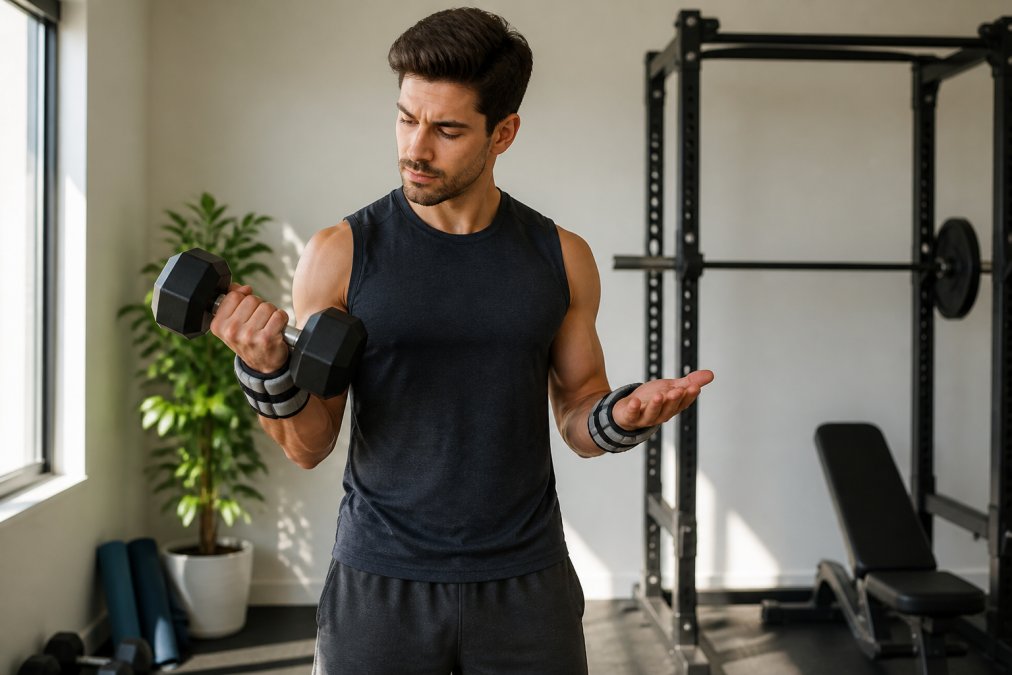
Most buyers assume dumbbells are simply "better" because they're heavier.
Here's the short version before the detail:
| Factor | Weighted Wrist Bands | Dumbbells |
|---|---|---|
| Best for | Cardio, endurance, constant tension | Muscle hypertrophy, strength |
| Load precision | Fixed or adjustable increments | Granular, dial-based |
| Portability | Worn on the body, zero setup | Requires rack or floor space |
| Joint stress | Lower impact, distributed | Higher if form slips |
| Cost entry point | Lower | Higher for a full set |
How Gravity and Load Distribution Change Every Rep
Dumbbells apply load vertically against gravity. The weight pulls straight down, and your muscles fight that single line of resistance, which is why dumbbell training builds predictable, measurable strength.
The resistance curve, side by side
The clearest way to see the difference is to trace the load through one repetition.
Lever length is the hidden variable
Torque is load multiplied by distance from the joint. A weight worn at the wrist sits roughly a hand-length further from the shoulder than a dumbbell gripped in the palm, and that distance compounds every time you raise your arm. A 3-pound band at the wrist can load the shoulder more than a 3-pound dumbbell held close to the body, the biggest reason wearable weights feel heavier than their listed weight.
What this means for gait and shoulder stability
During walking or running, wrist weights change the pendulum mechanics of the arm swing. The arms normally counter-rotate against the legs to keep the torso stable; adding mass at the wrist increases the inertia of that swing, so the shoulder and rotator cuff work harder to decelerate the arm. Over a long session that's cumulative fatigue in the small muscles that hold the shoulder joint centered.
The swap guide: what transfers and what doesn't
Not every dumbbell movement has a safe wrist-band equivalent. Use this as a starting filter.
Safe to swap to wrist bands (light load, controlled tempo):
- Lateral raises and front raises, the load stays close to the arm and the range is short
- Walking lunges and step-ups, the bands add drag without changing the joint path
- Shadow boxing and arm circles, the movement is already arm-led
- Bodyweight squats and glute bridges, ankle bands, not wrist bands, for the lower body
Do not swap, keep the dumbbell:
- Overhead press, the load sits far above the shoulder, and the moment arm is at its worst
- Bench press and floor press, the wrist cannot stabilize a shifting load against gravity
- Bent-over rows, the torso angle turns a wrist band into a shoulder-joint stress test
- Any heavy compound lift, the resistance curve is wrong for the goal
Swap with caution:
- Bicep curls, fine at very light loads, but the flattened resistance curve means you will need more reps to feel the same stimulus
- Triceps extensions, keep the elbow tucked and the load under 5 pounds per hand
The Benefits of Wearable Weights for Cardio and Endurance
The clearest benefits of wearable weights show up in cardio and endurance work, not heavy lifting. Walking, running, and bodyweight circuits all get harder without adding a rep.
Why Dumbbells Still Lead for Muscle Hypertrophy
Muscle hypertrophy responds to progressive overload, and progressive overload needs measurable, repeatable load. That's the dumbbell's home turf.
Adjustable Weighted Fitness Wrist and →
Building a Strength Training Equipment Set That Covers Both
A complete strength training equipment set doesn't force you to choose. The smartest home setups pair one load-precision tool with one wearable resistance tool, then use each for what it does best.
Here's how to split the work:
- Wearable bands: warm-ups, cardio, walking, bodyweight circuits, rehabilitation-style low-impact work
- Dumbbells: hypertrophy sets, strength progression, compound lifts, tracked overload
- Both together: finishers where you add wrist load to a dumbbell movement for extra time under tension
| Your Goal | Primary Tool | Secondary Tool |
|---|---|---|
| Fat loss and cardio | Wrist bands | Light dumbbells |
| Muscle growth | Dumbbells | Wrist bands for finishers |
| Beginner strength | Light dumbbells | Wrist bands for warm-ups |
| Endurance and gait work | Wrist bands | Bodyweight only |
Safety Tips for Weighted Wrist Bands and Long-Term Joint Wear
Safety tips for weighted wrist bands start with load placement, not load size. The further weight sits from your core, the more use it has on the joint below it.
Constant tension vs. variable resistance: why the joint feels it differently
Muscle adapts to load in weeks; tendon, ligament, and cartilage adapt in months. That mismatch is the root of most overuse injuries, and why the type of resistance matters as much as the amount.
The cumulative-load math
You don't need a lab to see the pattern. Track two numbers for a week: total minutes under wearable load and total minutes under dumbbell load. If the wearable number is more than double the dumbbell number, you're likely overloading the small stabilizers relative to the prime movers. Alternate, wearable resistance on cardio and warm-up days, dumbbells on strength days, so no single joint sees constant tension two days in a row.
Warning signs that are not normal soreness
Delayed-onset muscle soreness peaks 24 to 48 hours after training and fades with movement. Joint issues behave differently. Watch for:
- A dull ache at the wrist or elbow that is present before you train, not after
- Clicking or catching that comes with pain, not just noise
- Pain that localizes to one spot on the tendon rather than spreading across the muscle belly
- Symptoms that get worse as the session goes on rather than easing after warm-up
Practical rules that keep both tools safe
- Increase wearable load in small steps, no more than one increment per week
- Keep wrist and ankle bands under a load you could hold for a full session without form breaking
- Cap wearable resistance at roughly 20 to 30 minutes per session and remove the bands between exercises
- Warm up before any loaded work, wearable or free weight
- Stop a set when form degrades, not when the clock runs out
- Alternate heavy dumbbell days with lighter wearable-resistance days so no joint sees constant tension on back-to-back days
- Replace bands when the closure or stitching shows wear, a slipping band shifts load unpredictably
The best safety habit for either tool is the same: progress load slowly and let joint alignment drive the decision, not ego. Joints adapt slower than muscles, every time. The difference is that a dumbbell gives your joints a rest between sets, and a wrist band does not, so treat wearable load as a time budget, not just a weight.
Conclusion
The honest answer is that neither tool replaces the other. Wrist bands win for cardio, endurance, and constant-tension conditioning; dumbbells win for hypertrophy, tracked progressive overload, and real strength. If you train seriously, you'll eventually want both, and the order you buy them in should follow your actual goal.
Frequently Asked Questions
Are wrist weights as effective as dumbbells for building muscle?
Wrist weights are not as effective as dumbbells for building muscle because the load is limited and fixed. Dumbbells let you apply progressive overload with precise weight increments, which is the main driver of muscle hypertrophy. The adjustable dumbbell set from Health and Fitness Company ranges from 5 to 80 pounds per dumbbell, giving you the load precision that wrist bands cannot match. Use wrist bands for cardio and endurance, and dumbbells for muscle growth.
Can you use weighted wrist bands for strength training?
Yes, but within limits. Weighted wrist bands add resistance to bodyweight movements like push-ups, lunges, and shadow boxing. They create constant tension through the range of motion, which helps with muscular endurance and cardiovascular conditioning. For heavy compound lifts like squats, bench presses, or rows, dumbbells remain the better choice because they allow heavier loads and a full range of motion without shifting weight onto your joints.
Are there injury risks associated with wearing wrist weights?
Wrist weights can strain your shoulders and elbows if the load is too heavy or the movement is fast and repetitive. The added weight at the end of your arm increases joint stress during swinging motions. Start with light resistance, keep the weight under 2 pounds per wrist, and avoid using wrist bands for high-speed movements like running. If you feel tendonitis-like pain, stop and switch to dumbbells for that muscle group.
How do dumbbells compare to wearable weights for cardio?
Dumbbells are not practical for cardio because you have to hold them, which limits your movement and raises injury risk during fast-paced activity. Wearable weights like the Adjustable Weighted Fitness Wrist and Ankle Band stay on your body and let you walk, run, or do bodyweight circuits hands-free. They add 1 to 3 pounds per limb, enough to raise heart rate and calorie burn without disrupting your gait mechanics.
Which equipment is better for beginners starting a fitness journey?
Beginners should start with a strength training equipment set that includes adjustable dumbbells. They teach proper form, allow small weight increments, and support progressive overload from day one. Add wrist bands later for cardio and rehabilitation work. The FIXTECH Adjustable Dumbbell Set offers 4-in-1 modes (dumbbell, barbell, kettlebell, push-up stand) at $227.74, giving a beginner room to grow without buying multiple sets.