How to Choose Adjustable Weighted Wrist Bands for Running 2026

Table of Contents
- Why Adjustable Weighted Wrist Bands Beat Fixed-Weight Options for Runners
- The Real Benefits of Running with Wrist Weights
- Best Weight Range for Running Wrist Bands by Fitness Level
- Materials and Fit: What Separates Durable Bands from Cheap Ones
- How to Prevent Injury When Using Weighted Wrist Bands
- Stop Chafing Before It Starts: Long-Term Skin Care for Weighted Training
- Conclusion: Matching Your Bands to Your Running Goals
- Frequently Asked Questions
Last Updated: October 2, 2026
Why Adjustable Weighted Wrist Bands Beat Fixed-Weight Options for Runners
Adjustable weighted wrist bands are wearable resistance devices that let you change how much weight sits on each arm through removable inserts or sliding compartments. For runners, that adjustability matters more than any single feature, because your training load should change as your fitness changes. This guide from Health and Fitness Company breaks down how to choose adjustable weighted wrist bands for running 2026, from weight ranges to strap materials to injury prevention.

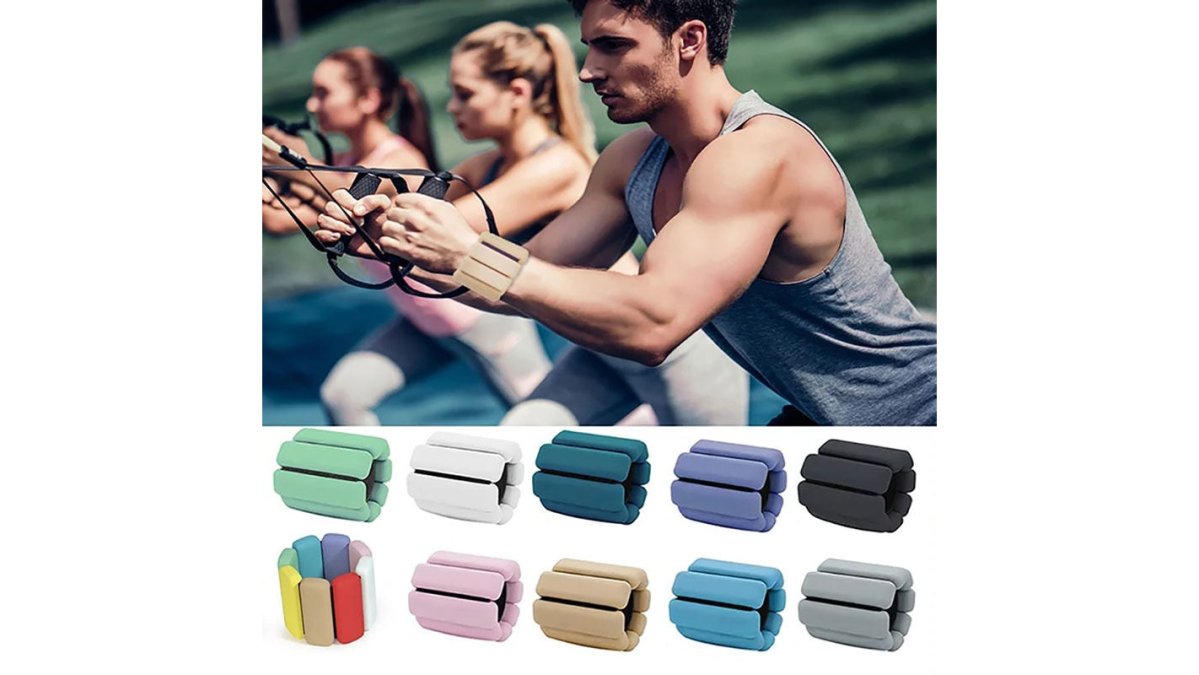
Fixed-weight bands lock you into one load forever. That's fine for a $15 impulse buy, but it's a problem the moment your endurance improves or your joints need a lighter day.
There's a second reason runners gravitate toward adjustable options: fit. A band that stays put at one pound can slip once you add weight, throwing off your arm swing.
The Real Benefits of Running with Wrist Weights
The benefits of running with wrist weights come down to one principle: adding resistance to a movement your body already knows.
But the mechanism matters more than the marketing. Your arms counter-rotate against your legs to keep your torso stable and your cadence consistent.
Wrist weights are often confused with ankle weights, but they serve different purposes. Ankle weights load your lower legs and can alter your stride more dramatically, changing the swing phase of your gait and increasing knee and hip stress.
How Weighted Training Builds Running Endurance
Weighted training builds running endurance by increasing the demand on your upper body and core with each stride. Your arms drive your cadence, so extra resistance makes your cardiovascular system work harder to keep pace, translating to better stamina when you run without the weights.
Many runners find even short weighted sessions improve their perceived effort on normal runs. The key is consistency, not heavy loading.
What Actually Changes in Your Gait
Adding weight to your wrists produces three predictable changes, and understanding them separates productive weighted training from a nagging injury.
1. Arm swing amplitude tends to shrink. Your body naturally reduces the range of motion to conserve energy when a limb is heavier.
2. Shoulder and upper-back demand increases. The muscles that stabilize your shoulder blade and keep your torso upright work harder to counteract the extra mass.
**3.
Who Benefits Most, and Who Should Skip Them
Wrist weights work best for runners with a consistent base who want to add a strength component without changing their running schedule. They're also useful for walkers and hikers who want upper-body engagement on flat routes.
They're a poor fit for runners with active shoulder, elbow, or wrist issues, and they're not a substitute for dedicated strength training. For raw strength, dumbbells and a proper program get you there faster with less gait disruption.
Best Weight Range for Running Wrist Bands by Fitness Level
The best weight range for running wrist bands depends on your experience, not your ego. Beginners should start light and progress slowly. Getting this wrong is the single most common mistake runners make with weighted gear.
| Fitness Level | Starting Weight (per wrist) | Progression | Session Length |
|---|---|---|---|
| Beginner | 0.5-1 lb | Add 0.5 lb every 2-3 weeks | 10-20 minutes |
| Intermediate | 1-2 lb | Add 0.5 lb every 2 weeks | 20-30 minutes |
| Advanced | 2-3 lb | Add 1 lb monthly | 30-45 minutes |
The table above reflects general guidance, not a prescription. Your joints and recovery capacity decide how fast you move up, and some runners stay at the same weight for months with good results.
Adjustable resistance is the whole point. Bands with weight increments let you fine-tune the load instead of jumping between fixed pairs. If you're choosing your first set, look for something that starts light and grows with you. Health and Fitness Company's Adjustable Weighted Fitness Wrist and Ankle Band is built around this idea, with a silicone and steel construction that supports adjustable loading across fitness levels.
Materials and Fit: What Separates Durable Bands from Cheap Ones
Durable wrist bands for running share three traits: a waterproof and sweatproof exterior, a cushioned lining, and a strap that holds its grip after hundreds of sessions. Cheap bands fail on all three, usually within a few months.
Silicone, Neoprene, and Sweat-Resistant Construction
Silicone and neoprene are the two materials you'll see most often, and they behave differently. Silicone is waterproof and sweat-resistant, wipes clean easily, and holds its shape.
For running, silicone-based bands hold up better: they don't soak up sweat, resist odor, and keep their grip even when your forearms are slick.
What most guides miss is the strap hardware. A secure strap with a wide contact area distributes load evenly; thin straps dig in and loosen mid-run, when a slipping band becomes a hazard rather than a training tool.
How to Prevent Injury When Using Weighted Wrist Bands
Injury prevention when using weighted wrist bands comes down to three things: starting light, keeping your form clean, and progressing gradually. Most weighted-training injuries build up quietly from repeated small compensations, a shortened arm swing here, a locked shoulder there, that accumulate into tendon irritation at the elbow, wrist, or rotator cuff over weeks.
Adjustable Weighted Fitness Wrist and Ankle Band →
The mechanism most guides skip: adding mass to your forearm moves your arm's center of mass further from your shoulder, increasing the torque your shoulder and elbow muscles must counteract with every swing. At a slow jog, cadence is roughly 160-180 steps per minute, so each arm swings about 80-90 times per minute. A half-pound increase per wrist multiplied across thousands of swings becomes a meaningful load on connective tissue that adapts more slowly than muscle.
Progressive Overload Without Breaking Your Stride
Progressive overload means adding stress gradually so your body adapts instead of breaking down. With wrist weights, that means small increments over weeks, not big jumps in one session.
A simple protocol that works for most runners:
- Pick a weight you can wear for a full run without your form changing
- Wear it for two weeks before adding anything
- Increase by the smallest available increment, not the largest
- Hold the new weight for two weeks before adding again
- Deload every fourth week by dropping back one level
This protects your joints and lets your biomechanics adjust to the new load. Coming from unweighted running, expect the first two weeks to feel awkward, that's normal, and it fades.
Measurable Triggers: When to Advance and When to Back Off
Gut feel is unreliable here, because weighted training is supposed to feel harder. Use objective signals instead.
Advance only when all four are true:
- You completed your last three sessions at the current weight with no form breakdown
- Your arm swing angle at the end of a run matches your arm swing angle at the start (check via side-view video)
- No joint soreness persists more than 24 hours after a session
- Your normal unweighted pace feels unchanged or slightly easier
Back off immediately if any of these appear:
- Elbow, wrist, or shoulder discomfort that lingers past the warm-up
- A shortened arm swing you can feel but can't correct mid-run
- Shoulder tension or shrugging that you have to consciously release
- Any sharp pain, numbness, or tingling in the hands or fingers
Deload Weeks and Recovery
A deload week is not lost progress. Connective tissue, tendons and ligaments, adapts more slowly than muscle and complains first when you push wrist loading too fast.
A common pattern: three weeks at a given weight, one week at the previous level, then back up. Runners who skip deloads often plateau or develop nagging elbow soreness that forces a longer, unplanned break.
Form Cues That Protect Your Joints
Three cues cover most of the risk:
- Relax the shoulders. If your shoulders are up near your ears, the load is too heavy or the strap is too high on the forearm.
- Keep the elbow angle consistent. Your arm should swing from the shoulder, not pump from the elbow. Elbow pumping concentrates stress at the joint.
- Match arm swing to leg cadence. If your arms are swinging faster or slower than your legs, the weights are disrupting your natural rhythm.
None of this replaces medical advice. If you have a history of shoulder, elbow, or wrist injury, get clearance from a healthcare provider before adding load to your arms.
Stop Chafing Before It Starts: Long-Term Skin Care for Weighted Training
Chafing prevention starts before the first blister, not after. Weighted bands sit against your forearm for extended periods, and friction plus sweat causes skin irritation if you ignore it.
The fix is straightforward: keep the band snug but not tight, wash and dry your forearms before each session, and wipe down the band after every use.
For longer or sweatier runs, consider a thin moisture-wicking sleeve under the band. This adds a barrier between skin and material without affecting fit.
Long-term irritation usually traces to one of three causes: a band that's too tight, one that never gets cleaned, or a material that doesn't breathe.
Conclusion: Matching Your Bands to Your Running Goals
Picking the right weighted wrist bands isn't complicated once you know what to look for: adjustable resistance, a secure strap, sweat-resistant materials, and a weight range that matches your current level.
Health and Fitness Company builds gear for exactly this purpose. Our adjustable wrist and ankle bands use a silicone and steel construction that's waterproof and sweatproof, with a cushioned fit designed for running and gym work alike.
Frequently Asked Questions
Are weighted wrist bands safe for running?
Yes, when you follow a few rules. Start with 0.5 to 1 pound per wrist and keep total added weight under 5 percent of your body weight. Secure the strap so the band sits snug without cutting off circulation. Skip them on tempo runs or race day. Use them for easy jogs and walking intervals instead, and stop if you feel shoulder or elbow strain. A cushioned, sweat-resistant band with a secure strap reduces slipping and keeps your gait natural.
How much weight should I use for running with wrist bands?
Beginners should start with 0.5 to 1 pound per wrist. Intermediate runners can work up to 2 pounds per wrist, and experienced athletes may reach 3 pounds. The best weight range for running wrist bands depends on your body weight and running volume. Add no more than 10 percent per week, and drop back if your shoulders round forward or your stride shortens noticeably. Light weight used consistently beats heavy weight used twice.
How do I prevent chafing when wearing weighted wrist bands?
Chafing comes from friction, moisture, and a loose fit. Choose bands with a cushioned lining and a sweat-resistant outer layer, such as silicone or neoprene. Tighten the strap so the band stays put with minimal bounce, but not so tight it leaves red marks. Apply an anti-chafe balm to your wrists before long sessions. After each run, wash the bands with mild soap and warm water, then air dry them completely before the next use.
What materials are best for sweat-resistant wrist weights?
Look for silicone or neoprene exteriors paired with a soft inner lining. Silicone resists moisture and wipes clean easily, while neoprene adds padding and grip. Steel inserts hold their shape better than sand-filled pouches, which can shift and bunch during a run. A waterproof and sweatproof build keeps the weight from absorbing moisture and getting heavier over time. The Adjustable Weighted Fitness Wrist and Ankle Band uses silicone and steel construction for exactly this reason.
Choosing weighted gear is easy. Choosing gear that holds up, fits right, and adjusts as you get stronger is where most runners get stuck. Health and Fitness Company makes adjustable weighted wrist and ankle bands with waterproof silicone and steel construction, a secure strap, and a cushioned lining built for daily training. Get started with Health and Fitness Company and find the weight range that matches your goals.